
Understanding EDC Flashlight Battery Types: Which One is Right for You?
Discover the key EDC flashlight battery types and find out which one suits your needs for optimal performance, runtime, and reliability.
EDC FLASHLIGHTS
The EDCBuzz Editorial Team - Led by AJ “Buzz” Eichman
4/2/20268 min read
Choosing the right battery for your everyday carry (EDC) flashlight is more than just grabbing whatever’s on sale. The battery you select profoundly impacts how your light performs, how long it lasts between changes or charges, and how reliable it is in different conditions. Since flashlights depend entirely on their power source, understanding the technical distinctions between battery types can help you optimize your carry for practicality and efficiency. Whether you prioritize runtime, portability, cold-weather resilience, or ease of replacement, knowing what goes inside your EDC flashlight will improve your user experience and extend the lifespan of both the battery and the light itself.
Quick Verdict
Lithium-ion rechargeable batteries offer high capacity and stable voltage but require specific chargers and can add initial cost.
Disposable alkaline batteries provide wide availability and low cost but have shorter lifespan and deliver reduced performance in cold weather.
Lithium disposable batteries excel in shelf life and cold-weather use, albeit at a higher price point.
NiMH rechargeable batteries are a greener option with consistent discharge rates but have lower voltage and self-discharge faster in storage.
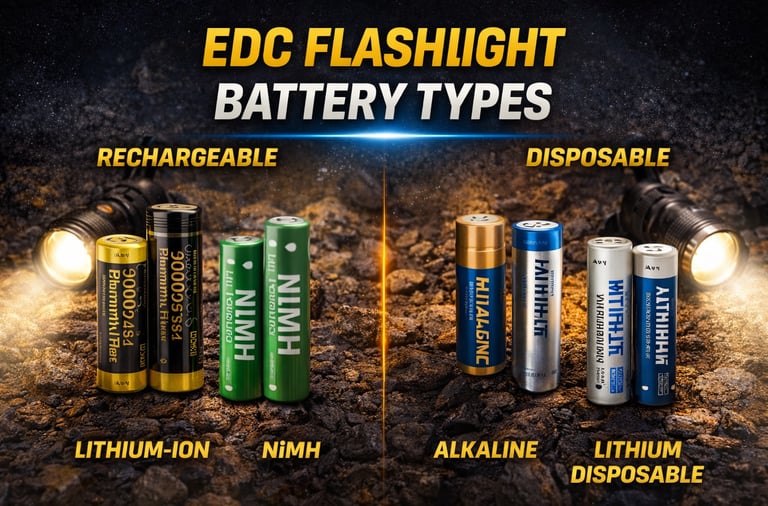
Overview of EDC Flashlight Battery Types
EDC flashlights typically use two broad categories of batteries: primary (disposable) and secondary (rechargeable). Each category includes several chemistries — alkaline, lithium-ion, lithium disposable, and nickel-metal hydride (NiMH) are the most common. Understanding how these chemistries influence voltage, capacity, longevity, and physical size is crucial because these factors intersect with flashlight design in defining brightness, runtime, and reliability. For a broader look at how these systems fit into everyday setups, it helps to explore the full EDC Flashlights category.
Primary batteries such as alkaline and lithium disposables come pre-charged and are intended for single-use until drained. Their appeal lies in wide availability and simplicity. Secondary batteries, primarily lithium-ion and NiMH, are designed to be recharged multiple times. This feature can offset their higher upfront cost through long-term use but demands compatible chargers and smarter maintenance.
How Different Battery Chemistries Work
Battery chemistry describes the internal reactions responsible for generating electrical energy, and that chemical makeup affects many performance parameters. For example, alkaline batteries react zinc with manganese dioxide and provide about 1.5 volts per cell but suffer rapid capacity drops under high-drain conditions and low temperatures. Lithium disposable cells, based on lithium iron disulfide or similar compounds, also output 1.5 volts but retain capacity more effectively over time and in the cold.
Rechargeables like lithium-ion operate around 3.6 to 3.7 volts due to their more advanced electrochemistry involving lithium ions shuttling between electrodes. This higher voltage means fewer cells can power a given flashlight, reducing weight while maintaining brightness and runtime. NiMH batteries provide roughly 1.2 volts per cell, lower than alkaline, but offer stable voltage delivery throughout their discharge cycle, which can benefit certain flashlight circuits.
Performance Comparison: Capacity, Voltage, and Runtime
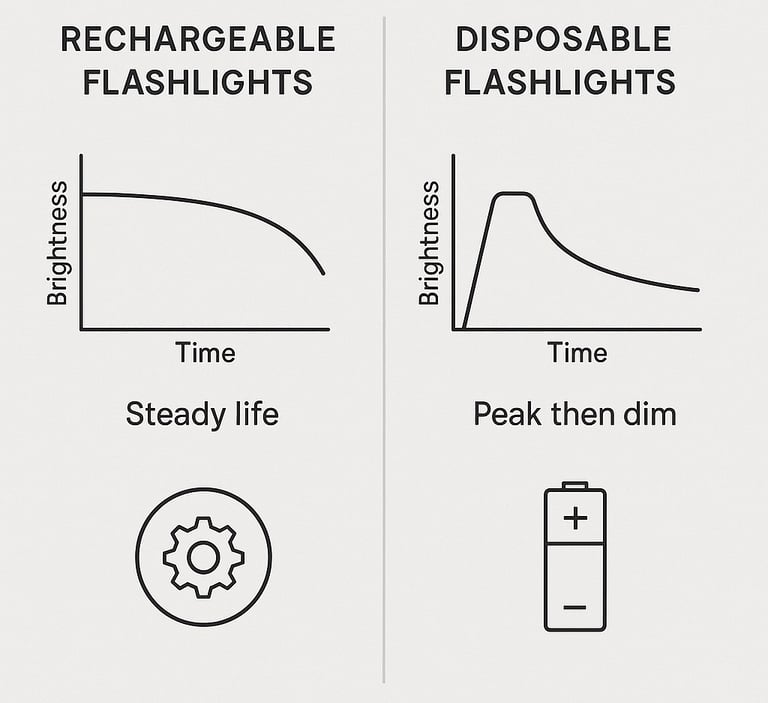
When evaluating battery performance, three key factors emerge: capacity (measured in milliamp-hours or mAh), voltage, and how those translate into actual runtime and brightness. Capacity indicates how much electrical charge the battery stores, directly influencing how long the flashlight will emit light at any given setting before dimming.
Lithium-ion rechargeable batteries such as 18650 or 21700 cells range broadly around 2000 to 5000 mAh, depending on quality and brand, and supply a stable 3.6-3.7 volts. This combination results in long runtimes and consistent brightness output, ideal for users who rely heavily on their EDC lights, especially at high power settings. These performance advantages are often reflected in curated gear selections like best edc flashlights when comparing sustained output and efficiency. Alkaline batteries typically offer lower capacities—around 2000 to 3000 mAh at 1.5 volts—but experience voltage drop-offs as they discharge, reducing brightness over time.
Lithium disposable batteries usually outperform alkaline in terms of shelf life and cold-weather capacity. The voltage remains more stable until the battery is near depletion, which can be critical during outdoor activities where consistent light output matters. NiMH batteries tend to have lower nominal voltage (1.2 volts) and capacity (typically 1500 to 2500 mAh), but their ability to deliver steady voltage makes runtime more predictable in some flashlights, albeit shorter overall compared to lithium-ion alternatives.
Rechargeable vs Disposable Batteries: Pros and Cons
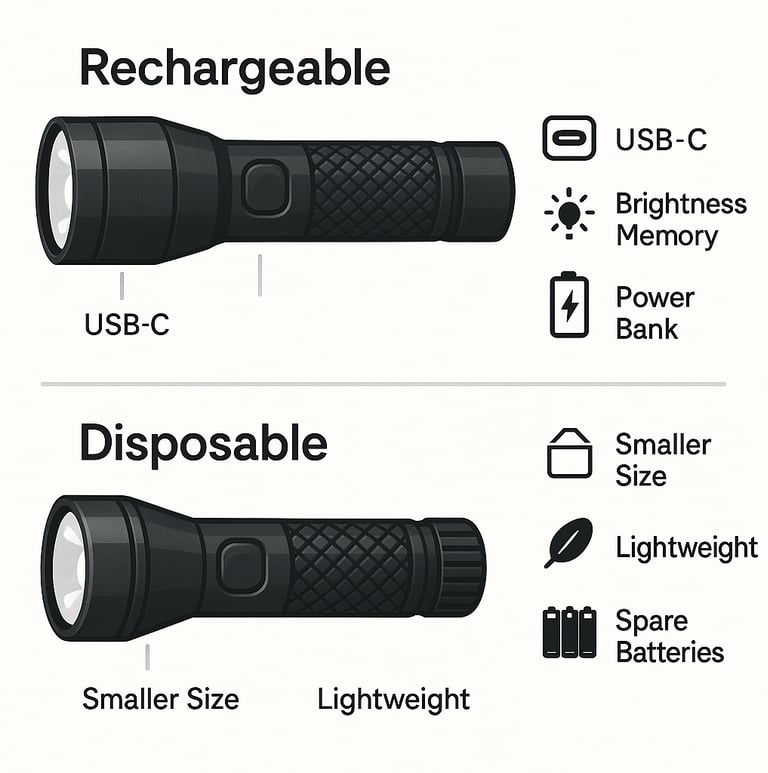
Choosing between rechargeable and disposable batteries involves understanding specific trade-offs based on user needs and flashlight design compatibility. Rechargeable lithium-ion cells offer higher energy density, meaning more power in a smaller package, translating to longer runtimes or lighter carry weight. Over time, they can be more cost-effective for frequent use despite higher initial investment. However, they require compatible chargers, proper charging protocols, and occasional replacement once they exhaust their charge cycles, which typically range between 300 to 500 full cycles before noticeable capacity loss.
On the other hand, disposable alkaline batteries are ubiquitous and cheap, making them a convenient choice for occasional users or emergencies. They don’t require maintenance and can be stored inert for several years but tend to lose performance quickly in cold weather or high-drain devices. Lithium disposable batteries improve on these drawbacks with longer shelf life and better voltage stability but at a higher price and a lower safety margin during disposal. These trade-offs are explored more directly when comparing rechargeable vs disposable flashlights in real-world use.
NiMH rechargeable batteries provide a middle ground: they are environmentally friendly and safe with moderate capacity and voltage. Their internal resistance remains low even after many charge cycles, maintaining reliable output, but they self-discharge faster than lithium-ion, especially without a trickle charger, which can be a downside if you don’t use your flashlight regularly.
Battery Size and Flashlight Compatibility
Flashlight design often dictates the type and size of battery needed, so it’s not just about chemistry but also physical dimensions and voltage requirements. Common sizes in EDC flashlights include AA, AAA (both often alkaline or NiMH), and larger cylindrical cells like 18650 or 21700 lithium-ion cells. The higher voltage lithium-ion cells allow manufacturers to design lights with fewer cells for equivalent or better performance, reducing overall size and weight.
Before selecting a battery, it’s critical to verify the flashlight’s recommended power source. Using batteries with the wrong size or voltage can lead to poor performance, premature failure, or even damage. Some flashlights require regulated voltage inputs or have low-voltage cutoffs to protect circuitry, meaning mixing battery chemistries or substituting among types without checking specifications can cause problems. These compatibility differences become clear when looking at performance-focused comparisons like Fenix TK21R vs Streamlight 88052.
Tips for Battery Maintenance and Safety
Proper care extends battery life significantly and prevents damage that can jeopardize your flashlight’s reliability. For rechargeable batteries, using chargers designed specifically for their chemistry—such as lithium-ion or NiMH—is essential. Overcharging or using incompatible chargers can cause overheating or capacity degradation. Storing batteries at moderate temperatures and partial charge levels slows capacity loss, especially for lithium-ion types with a natural tendency to self-discharge.
For disposable batteries, avoiding mixing old and new cells or combining different chemistries inside one flashlight prevents unbalanced discharges that can harm both the battery and device. Keeping spare batteries stored in cool, dry environments maximizes shelf life and prevents leakage or corrosion.
Choosing the Best Battery Based on Your EDC Needs
When selecting your flashlight battery, weigh your typical usage patterns, intended environments, and priorities. If you rely on your light daily and value consistent high output, investing in quality lithium-ion rechargeables along with a compatible charger makes sense. Their superior capacity and stable voltage deliver dependable performance for work, commuting, or extended outdoor use. Budget-friendly options that still deliver solid output are often found in lists like best edc flashlight under 50 for practical everyday carry.
If you use your flashlight intermittently or prefer quick replacement without recharging, alkaline disposables are a practical budget choice. However, for cold-weather users or emergency kits where long shelf life and reliable power are crucial, lithium disposable batteries offer better assurance even if you pay more upfront.
NiMH rechargeable batteries suit users who prioritize environmental considerations and moderate usage but are willing to manage the shorter storage life and lower voltage. Always confirm that your flashlight supports the battery chemistry and size you pick, as compatibility influences both function and safety. Compact lights that rely on smaller cells can often be found in collections like best keychain flashlights.
Common Battery-Related Mistakes to Avoid
One frequent error is assuming any battery will function similarly across flashlight models without checking voltage, size, or chemistry compatibility. This can lead to dimming, shortened runtimes, or even device failure. Another common mistake is using rechargeable batteries in devices not designed for them, which may reduce battery lifespan or damage the flashlight’s electronics.
Improper storage conditions also degrade battery performance; for example, leaving disposables in hot or humid environments accelerates capacity loss. Mixing old and new batteries or different chemistries inside the same flashlight is a recipe for uneven power delivery and potential leaks. Finally, neglecting cold-weather performance requirements can leave you stranded with weak or dead batteries during outdoor activities in low temperatures.
Frequently Asked Questions
What are the main types of batteries used in EDC flashlights?
EDC flashlights commonly use alkaline and lithium disposable batteries as primary options, and lithium-ion or NiMH rechargeable batteries as secondary options. Each type offers unique performance characteristics suited for different use cases.
How long does each battery type typically last in daily use?
Battery lifespan varies by capacity, usage intensity, and flashlight power settings. Lithium-ion rechargeables can provide several hours to tens of hours of continuous use per charge, while alkaline disposables generally run several hours but with voltage drop-off. Nickel-metal hydride batteries usually deliver slightly less runtime than lithium-ion but maintain steadier output.
Can I use rechargeable batteries in any EDC flashlight?
Not necessarily. Some flashlights are designed specifically for disposable alkaline or lithium batteries and may not accommodate the voltage or size of rechargeables. Always check manufacturer recommendations to prevent damage.
What are the pros and cons of disposable vs rechargeable flashlight batteries?
Disposable batteries offer convenience and wide availability with no charging needs but typically have shorter lifespan and performance limitations in cold weather. Rechargeables provide longer terms of use and more consistent output but require charging infrastructure, proper maintenance, and higher upfront cost.
How does battery size affect flashlight compatibility?
Battery size impacts physical fit and voltage supply. Common sizes like AA or AAA are prevalent in smaller flashlights, while larger lithium-ion formats like 18650 provide higher voltage and capacity but are only compatible with specific models designed to accept them.
How to properly charge and maintain rechargeable batteries?
Use a charger designed for the battery chemistry, avoid overcharging by removing batteries when full, store them partially charged in cool conditions, and avoid mixing batteries of different ages or types in the same charger or flashlight.
Which battery type performs best in cold weather?
Lithium disposable batteries outperform alkalines in low temperatures, maintaining voltage longer. Lithium-ion rechargeables can be affected by cold but generally perform better than alkalines. NiMH batteries tend to lose capacity quickly in extreme cold.
Are lithium batteries safe to carry daily?
Modern lithium-ion and lithium disposable batteries are safe when handled properly—stored away from extreme heat, physical damage, or metal contacts. Using proper protective cases and following battery safety guidelines minimizes risks.
Conclusion
Selecting the right EDC flashlight battery isn’t merely about grabbing the most popular or cheapest option. It involves understanding how different battery chemistries influence voltage stability, capacity, runtime, and environmental resilience—factors that directly impact the flashlight’s operational reliability. Rechargeable lithium-ion cells deliver the highest capacity and steady voltage ideal for heavy users, while disposable alkaline and lithium batteries offer convenience and long shelf life respectively for occasional or emergency use. NiMH rechargeables serve a useful niche for environmentally conscious users balancing performance and ease of care.
By aligning your choice with your typical usage, flashlight specifications, and environmental demands, you optimize your EDC gear’s performance rather than just guessing. Smart battery selection combined with proper maintenance ensures your flashlight remains a trusted tool, ready whenever called upon—day in, day out.

Contact@TheBuzzHQ.com
© 2026 EDCBuzz. All rights reserved.
EDCBuzz
Master everyday carry systems with clarity and precision. Built for real environments and practical use.
For educational purposes only.
General Inquiries: