
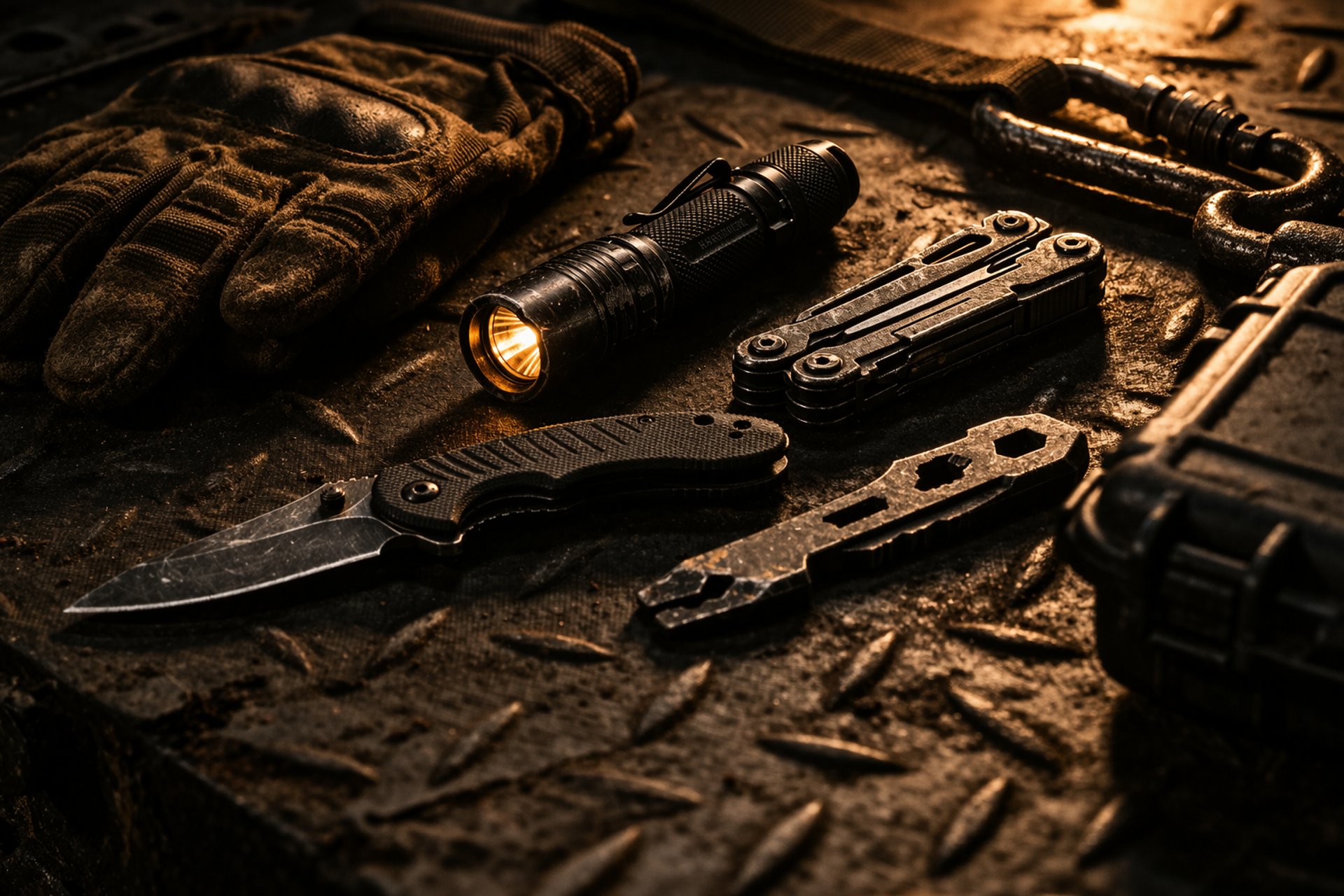
Why Your Job Should Influence Your EDC Loadout
Discover how tailoring your EDC loadout to your job boosts daily efficiency and comfort with the right tools chosen for your work environment.
LOADOUTS
The Coffee Tech Buzz Editorial Team - Led by AJ “Buzz” Eichman
6/11/20267 min read
Everyday carry gear isn’t just about having cool tools at your fingertips—it’s about having the right tools for the job, literally. After spending weeks and months with a variety of gear in different professional settings, I can tell you that tailoring your EDC loadout to your job doesn’t just make sense; it can genuinely improve your daily efficiency and comfort. The items you choose to carry should reflect the specific demands of your work environment, the nature of your tasks, and the kind of professionalism your role requires.
You might start out thinking all you need is a trusty knife, a pen, and a flashlight. But after a few days, or in some cases a few weeks, you’ll notice how certain tools just don’t hold up or aren’t quite practical for your work routine. On the flip side, the tools that really cater to your job’s nuances tend to settle into daily use easily, often blending in so well you forget they’re there—except when you need them. Then they feel downright indispensable.
If you're trying to match your gear to your work environment, the EDC Loadouts Guide and EDC Loadout Builder by Budget provide a useful framework for building a role-specific setup.
Quick Verdict
• Tailoring your EDC loadout to your job improves practicality, comfort, and readiness.
• Prioritize tools that reflect your daily tasks and work environment for better efficiency.
• Pay attention to materials and build quality to ensure durability without unnecessary bulk.
• Regularly update your gear to match evolving job demands and workplace policies.
Understanding the Role of Job Function in EDC Gear Selection
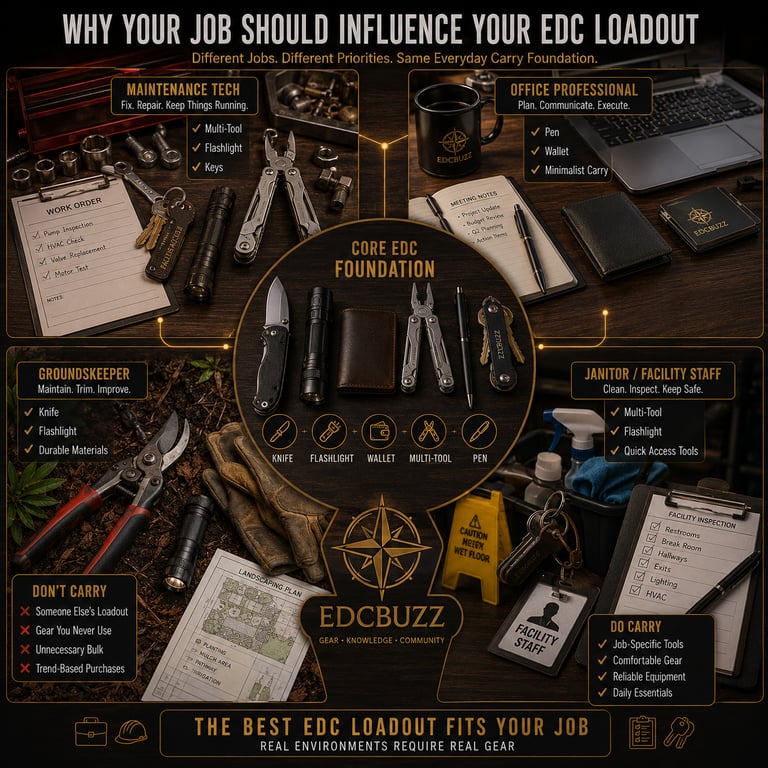
Not all jobs are created equal, and neither should your EDC gear be. The difference between the everyday gear of a field technician working outdoors and an office professional spending their day at a desk is significant. What works brilliantly for one can feel completely out of place for another.
In my experience, the biggest mistake is assuming a one-size-fits-all EDC kit will serve you well regardless of your day-to-day responsibilities. The reality is that the specifics of job tasks—whether that means regular cutting, writing, repairs, or note-taking—should guide what you carry.
A utility knife that gleams with titanium handles might be great to look at, but if your job demands quick, repetitive access, it might feel too bulky or slippery after hours of use.
For a closer look at how different careers influence gear choices, see Work EDC Loadouts.
Key Factors to Consider When Choosing Work-Appropriate EDC Items
The subtle things become loud after living with your gear day after day.
Consider grip comfort first. Does the handle of your knife or multi-tool curve just right, or do your fingers start to ache after repeated use? If writing instruments suffer from smudging or ink skipping during critical meetings, that’s a practical problem worth addressing.
Another factor is weight distribution. After a long shift, the weight of your gear can creep into your awareness. It’s not necessarily a dealbreaker, but it sure reminds you it’s there—especially if you sit down without noticing your tools in your pocket. Ideally, your EDC weight should settle quietly without whining for attention.
Also, think about ease of deployment. Tools that require fiddling to open or clip awkwardly to your belt might seem fine at first glance, but the daily grind exposes their limitations. Streamlined access and the ability to use your tools one-handed make a significant difference over time.
Materials and Construction That Fit Your Work Environment
Workplace environments have their own personalities, and your gear should fit right in.
For example, if your job puts you outdoors or around moisture, corrosion-resistant materials like stainless steel or anodized aluminum will keep your tools functional and looking decent over the long haul. On the other hand, office settings often favor discrete designs with matte finishes and slimmer profiles that don’t scream “Look at me!”
I remember swapping out a flashy, heavy multi-tool for a more understated titanium one before going into a professional setting. The difference was subtle but noticeable—less noise, less clinking, and a carry that felt more aligned with my role instead of an afterthought.
Beyond materials, consider the functionality built into construction. Does your flashlight have adjustable brightness for varying light conditions? Is your pen designed for smudge-resistant writing to avoid awkward stains on documents? Small things, but they count.
Top EDC Tools for Common Professional Roles
Office professionals often benefit from compact pens with smooth ink flow, slim wallets that hold just the essentials, and minimalist tools designed for occasional use, like small scissors or a letter opener.
The goal here is to keep the load light and subtle without sacrificing the ability to tackle everyday small tasks. If that sounds familiar, compare the Best Budget Office Worker EDC Loadout and Best Premium Office Worker EDC Loadout to see how priorities change as budgets increase.
Field technicians or outdoor workers lean towards durable multi-tools, corrosion-resistant knives, and reliable flashlights with adjustable beams that perform well in low light. Their gear tends to be more rugged, balancing resilience with the ability to handle various equipment-related challenges on the job.
Healthcare workers value hygiene and ease of cleaning, so their EDC often includes sanitized pens, compact bandage scissors, and badge holders designed for quick access and minimal contamination risk.
Creative professionals might carry specialized EDC like precision pens, measuring tools, and small portable storage devices for digital presentations—tools that support creativity and client interaction with finesse.
Retail and hospitality staff usually favor discrete, lightweight wallets and writing instruments that stay out of sight but are ready when needed, especially during busy back-of-house or shift changes.
How to Customize and Update Your EDC Loadout Over Time
No EDC loadout is set in stone.
As job demands evolve, so should your gear. After a few months, you might find certain tools becoming more strain than help or realize you’re reaching for some items far less often than you thought.
A practical habit is to review your kit regularly—monthly or quarterly—testing each tool’s performance and relevance. If a pen keeps drying out after a couple of days, swap it for a more dependable refill. If your multi-tool’s locking mechanism starts to feel loose, consider a replacement rather than pushing your luck.
Customizing your carry methods also helps. Clip placement, pocket choice, or the addition of a small pouch can improve accessibility and comfort. In some workplaces, pocket space is at a premium, and switching to a thinner or lighter tool can make the difference between annoyance and ease.
If you're still experimenting with different combinations, How the EDC Loadout Builder Works can help visualize options before making changes.
Workplace Policies and Practical Tips for Carrying EDC Gear
It’s tempting to pack everything just in case—but workplace policies often have a say in what’s acceptable.
Some offices may restrict the size or type of tools allowed, while others might require gear to be less visible for safety or professionalism.
Before assembling your loadout, take a moment to check if your workplace has official policies about carrying tools. Ignoring these can lead to awkward conversations or the inconvenience of having to stash your gear elsewhere.
Once you know the rules, select gear accordingly. Opt for low-profile designs in corporate settings and choose corrosion-resistant, easy-to-clean tools in labs or food service. Also, think about carry comfort—tools clipped awkwardly or hanging from belt loops may interfere with movement or dress codes.
For professionals deciding between corporate and leadership-focused setups, Office Worker vs Executive EDC Loadout highlights some of the differences.
Common Mistakes When Building Job-Specific EDC Loadouts
One of the most common missteps is carrying a standard EDC kit that doesn’t really match the job’s requirements. You end up toting redundant or impractical items, adding unnecessary bulk without adding value. It’s like bringing snow boots to the beach—probably not the best fit.
Another issue pops up when ignoring workplace restrictions. A heavy, flashy knife or oversized multi-tool might be impressive, but if your office frowns on visible gear or has size limitations, it’s a recipe for discomfort or even forced adjustments.
Overloading your pockets can lead to fatigue and scratch the surface of professionalism. I’ve noticed that too much gear not only weighs me down but also makes finding the right tool slower—defeating the point of efficiency.
Finally, failing to maintain and test gear related to your work tasks is a rookie move. Keeping blades sharpened, lights charged, and pens refilled ensures your tools are ready when you need them—not when you remember to give them attention.
For a deeper dive into common planning mistakes, How Much Should an EDC Loadout Cost? and How to Build an EDC Loadout on a Budget both cover areas where many new carriers go wrong.
Frequently Asked Questions
How do I determine which EDC items are essential for my specific job role?
Start by observing the tasks you perform daily. Identify any small obstacles or frequent needs that could be addressed by a tool. Consult colleagues for their carry approaches, and consider workplace policies. Trial and error over a few weeks usually helps refine the essentials.
What are the best materials for EDC tools used in different work environments?
Stainless steel, titanium, and anodized aluminum balance durability, corrosion resistance, and weight. Outdoor or humid environments favor corrosion-resistant materials, while office settings might prefer lighter, discreet finishes.
Can I customize my EDC loadout for multiple job roles or work shifts?
Yes, you can. Modular gear or interchangeable components help tailor your loadout depending on whether you’re in the field or the office. For shifts with varying responsibilities, consider carrying the core essentials and swapping specialized tools as needed.
How often should I update or reevaluate my workplace EDC gear?
Every few months is a good rule of thumb. If your role changes or workplace protocols update, it’s prudent to reassess your gear to ensure ongoing relevance and comfort.
What are common workplace restrictions on carrying tools and how to comply?
Restrictions can include limitations on tool size, type, visibility, or operating mechanisms. To comply, research company policies, select compact and non-obtrusive gear, and avoid tools that could draw unwanted attention or interfere with daily work.
Are multi-tools better than single-function tools for professional carry?
It depends on the job. Multi-tools maximize utility and reduce bulk, but sometimes specific single-purpose tools perform better and feel more comfortable. Balance versatility with ergonomic needs for your work tasks.
How to balance durability and weight in professional EDC items?
Choose materials that provide sufficient strength without unnecessary heft, like titanium or anodized aluminum. Prioritize tools with thoughtful design rather than just heavier construction, and test how they feel after a full day’s carry.
What gear organizations or carry styles improve accessibility and safety at work?
Pocket clips, slim pouches, and dedicated carry compartments enhance accessibility and reduce fumbling. Consistent placement and ergonomic grips also contribute to safer, quicker use.
Practical Conclusion
Your job matters when it comes to your everyday carry gear. After months of living with various tools in different roles, I’ve learned that a well-tailored EDC loadout can quietly transform how your workday flows.
It’s not about carrying the fanciest knife or the biggest multi-tool—it’s about having the right tools that feel natural on your person, stand up to your environment, and help you get the job done without fuss.
So, take a moment to think beyond “what looks cool on a gear blog” and focus on your day-to-day realities. Regularly reassess your loadout, respect your workplace’s rules, and favor simplicity where possible.
After all, the best EDC is the one you carry every day without even thinking about it—well, except when you really need it. And at that moment, it better work.

Contact@TheBuzzHQ.com
© 2026 EDCBuzz. All rights reserved.
EDCBuzz
Master everyday carry systems with clarity and precision. Built for real environments and practical use.
For educational purposes only.
General Inquiries: