
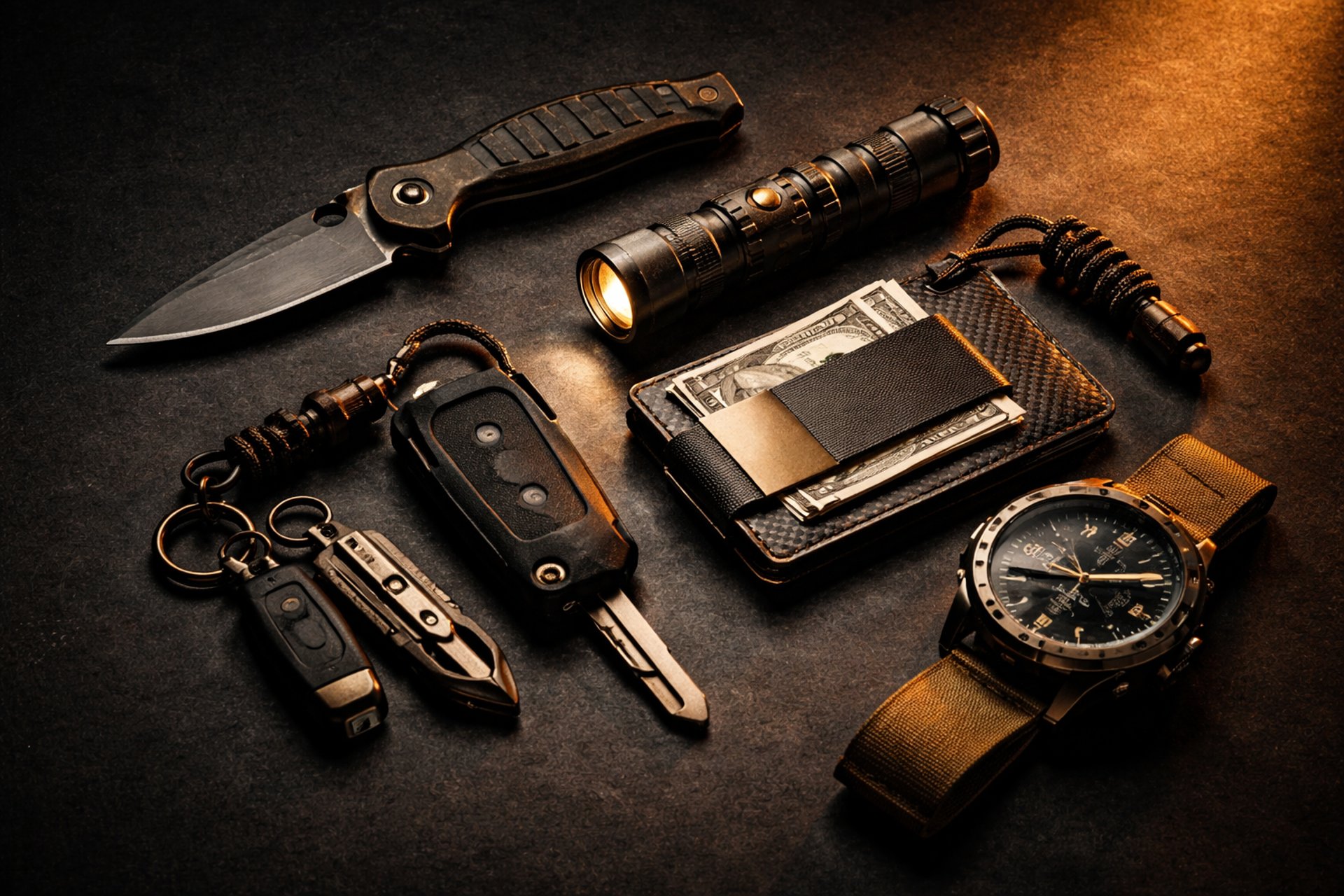
How to Build an EDC Loadout on a Budget
Learn how to build a practical EDC loadout on a budget with essential, durable tools that deliver value and versatility for everyday use.
LOADOUTSEDC TUTORIALS
The EDCBuzz Editorial Team - Led by AJ “Buzz” Eichman
6/11/20267 min read
Everyday carry—EDC, for short—has become a cornerstone for many who appreciate having the right tools handy for daily tasks, be it opening packages, scribbling notes, or lighting up a darker corner of the office. But let’s be honest: the gear hype often points toward high-end models with price tags that could fund a modest vacation.
The good news? Building a reliable and practical EDC loadout on a budget is not just possible, it’s downright sensible. The trick lies in picking everyday carry essentials that deliver solid performance and durability without emptying your wallet.
If you're trying to build an affordable setup from the ground up, the EDC Loadouts Guide and EDC Loadout Builder by Budget provide a structured way to compare options and stay within budget.
Quick Verdict
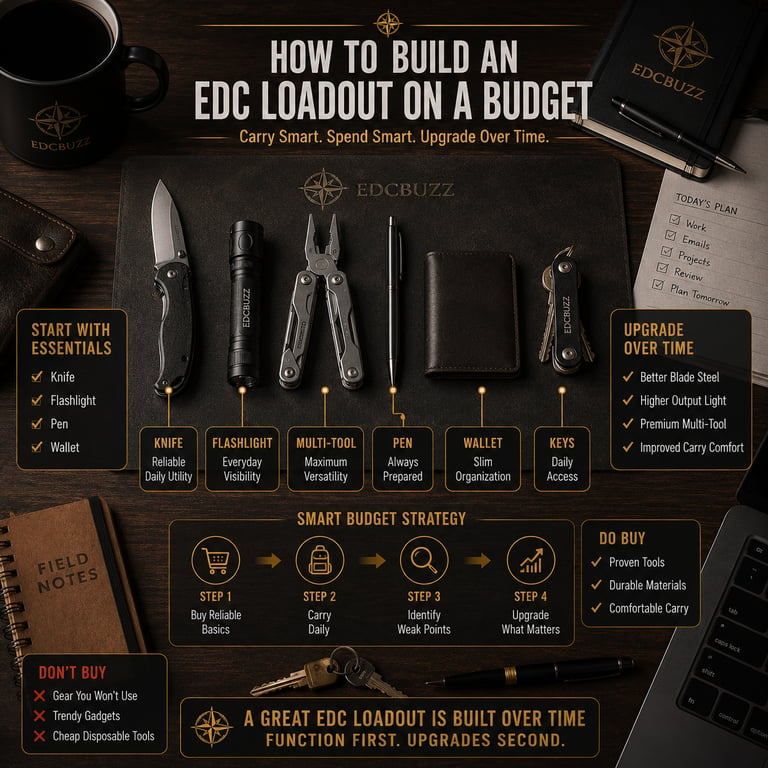
• Focus on essential tools — a knife, multi-tool, flashlight, pen, wallet, and watch — instead of chasing every shiny gadget.
• Look for budget gear built with durable materials like stainless steel blades and aluminum or polymer bodies.
• Prioritize versatility by choosing combo tools that reduce the number of items you need to carry.
• Upgrade gradually—put your money into the pieces you wear every day and replace or add others over time.
Understanding Essential EDC Items for Budget Builds
If you’re just starting or looking to trim your load without sacrificing utility, the key is to refine your gear list down to essentials. Your goal: tools that get the job done daily, from small cuts and quick notes to lighting your way after dusk.
Typically, your EDC loadout might include:
A reliable everyday carry knife with a stainless steel blade.
A multi-tool for occasional screwdrivers, bottle opening, and minor repairs.
A compact flashlight offering decent brightness and battery life.
A quality pen for jotting things down—because digital runs out of juice.
A slim wallet to carry your essentials without the wallet bulge.
A watch that combines style with practicality, not a luxury conversation piece.
Trying to buy all these at once in premium versions could get costly quickly. Instead, focus on affordable options that don’t cut corners on build quality. For many people, this is exactly where Budget EDC Loadouts become useful.
Key Materials and Construction to Look for in Budget Gear
When shopping budget EDC, materials matter—especially if you plan to carry and use your gear day in and day out.
Stainless steel blades like 8Cr13MoV or AUS-8 might not have the cachet of premium steels, but they offer decent edge retention and corrosion resistance without blowing your budget. These steels usually hold up well enough for daily cutting tasks—think slicing cardboard, opening mail, or meal prep.
For multi-tools, stainless steel remains common, though you might find lower-grade alloys paired with polymer handles. These can be lighter and cheaper but check the joint stiffness and tool lockup—cheap doesn’t mean flimsy if you find the right model.
Flashlights commonly incorporate aluminum or hard plastic bodies, balancing weight and durability. You can find budget LED flashlights offering 100-300 lumens, bright enough for most everyday scenarios without needing a rocket launcher of light.
Pens and wallets also have material considerations. Refillable gel or ballpoint pens with metal or sturdy plastic barrels stand up better over time, and slim polymer or aluminum wallets minimize bulk while resisting wear. Watch cases typically use stainless steel or durable resin; quartz movements keep the cost down without sacrificing dependability.
Balancing Cost and Functionality: How to Choose Wisely
It’s tempting to go for the cheapest gear available, but this often results in sacrificing comfort, longevity, and practical functionality.
For example, a knife that’s too heavy or has an awkward grip will start to feel like a pocket burden after a day’s use. A flashlight too bulky or with a poorly designed clip may spend more time in your desk than your hand.
Look for feedback from users who’ve lived with the gear longer than a day. Watch for mentions of grip fatigue, pocket wear, or flimsiness in hinge mechanisms. Sometimes this means spending a little more upfront to avoid disappointing replacements or additions later on.
Versatility in your EDC tools helps stretch your budget further. Rather than carrying separate screwdrivers, a distinct bottle opener, and a small knife, a good multi-tool combines these functions in one piece. Similarly, a pen with built-in stylus or extra functions can keep your kit compact.
As your budget grows, resources like What Should You Upgrade First in an EDC Loadout? can help determine where additional spending provides the most value.
Top Affordable EDC Tools and Brands to Consider
Some brands have carved out a reputation for delivering solid budget-friendly EDC tools that stand up to daily use. Without trying to rehash every option on the market, here are some reliable starting points:
Knives
Several affordable knives from brands like Kershaw, CRKT, and Spyderco feature stainless steel blades and ergonomic handles at lower price points. Their build quality tends to reflect thoughtful design rather than cost-cutting.
Multi-tools
Companies such as Leatherman offer entry-level models that pack a punch without the premium price tag. Tools often include essential screwdrivers, blades, and pry tools, making them versatile companions.
Flashlights
Budget flashlights from brands like Olight and ThruNite offer impressive lumen output for the price and hold up well for everyday carry. Their compact size often allows easy pocket carry without nuisance weight.
Pens, wallets, and watches have similarly solid affordable options—look for stationery brands that focus on refillability and durability, minimalist wallet designs in durable materials, and quartz watches known for reliability.
Tips for Incremental Upgrading and Maintenance
Building a complete, effective EDC loadout doesn’t have to happen overnight.
One of the best moves on a budget is to buy incrementally—prioritize the gear you’ll use the most and upgrade selectively. For example, start with a decent knife and pen, then add more tools as your daily needs evolve.
Don’t forget maintenance. Keeping your gear clean and serviced extends its useful life dramatically. Sharpen your knife periodically, clean flashlight contacts and batteries, and refill pens with quality ink. Treating your budget gear well ensures it performs reliably without needing frequent replacement.
For readers comparing spending strategies, How Much Should an EDC Loadout Cost? pairs well with this approach.
Common Budget EDC Mistakes to Avoid
Opting for ultra-cheap gear that fails quickly or frustrates use. A $10 knife that dulls after a day might seem like a steal until you reach for it and find it useless.
Buying too many items rather than focusing on a handful of high-utility essentials. Bulk defeats the purpose of easy and practical everyday carry.
Overlooking weight and size considerations, causing discomfort or pocket bulge that makes carrying a chore.
Ignoring the specific daily tasks you regularly perform. Gear should match your real habits, not aspirational ones.
Skipping user reviews and hands-on testing, relying solely on specs or looks. Practical feedback often reveals what the glossy product photos don’t.
Your profession can also influence what belongs in your kit, which is why Why Your Job Should Influence Your EDC Loadout is worth considering before making purchases.
Real-World Examples of Budget EDC Loadouts
Let’s say you commute daily and deal mostly with paperwork and occasional minor repairs. A budget loadout might include:
A Kershaw folding knife with a 3-inch stainless steel blade.
A Leatherman Style PS multi-tool with pliers, scissors, and screwdrivers.
An Olight I3E EOS flashlight with 180 lumens, slim enough for your front pocket.
A Uni-Ball Jetstream refillable pen.
A slim aluminum wallet that holds a few cards and cash.
An affordable quartz watch with water resistance for daily wear.
This collection barely breaks a hundred bucks, but each item holds its own reliability, comfort, and practical functionality through weeks of daily carry.
You might notice the knife’s handle starts to develop a slight shine from use, or the multi-tool’s hinge loosening a bit — signs you’ve genuinely used the gear rather than admired it on a shelf. And that flashlight? It’s light enough to disappear in your pocket — unlike the one you forgot you were carrying until you sat down.
If you're trying to compare different budget allocations before buying, How the EDC Loadout Builder Works can help visualize different combinations.
For office-focused setups, comparing Best Budget Office Worker EDC Loadout and Best Premium Office Worker EDC Loadout can also highlight where additional spending actually improves everyday usability.
Frequently Asked Questions
What are the must-have everyday carry essentials on a budget?
Focus on a reliable knife, multi-tool, flashlight, pen, wallet, and watch. These tools cover most daily needs without excess.
How to balance cost and quality when selecting EDC gear?
Prioritize proven materials, user reviews, and comfortable design over just low price. Budget-friendly doesn’t mean low quality if you choose well.
Which materials offer the best durability for budget EDC knives and tools?
Stainless steel blades like 8Cr13MoV and AUS-8 paired with aluminum or polymer handles strike a good balance of durability and cost.
Can budget flashlights provide sufficient brightness and run-time for daily use?
Yes, many LED flashlights under $50 provide 100-300 lumens with ample battery life for most everyday scenarios.
How to choose a multi-tool versus individual single-use tools for budget EDC?
Multi-tools maximize utility per item and reduce carry bulk, making them ideal when space and budget are limited.
What are good affordable brands or models for common EDC gear?
Brands like Kershaw, CRKT, Leatherman, Olight, and Uni-Ball offer solid entry-level options across categories.
How to maintain and prolong the life of budget EDC gear?
Regular cleaning, sharpening knives, refilling pens, and proper storage go a long way toward reliable performance.
Is it better to buy all EDC items at once or upgrade gradually over time?
Incremental upgrading based on your daily needs helps you invest wisely and avoid gear overload.
Conclusion
Building an everyday carry loadout on a budget needn’t mean settling for gear that feels cheap or inconvenient after a few wears.
By focusing on essential tools crafted from durable materials, embracing versatility in your choices, and committing to realistic, incremental upgrading, you can carry a collection that blends practicality with long-term comfort.
It’s about gear that fits your lifestyle, performs reliably, and shows the marks of genuine use — not the shine of impulse buys or trends.
After all, what’s the point of an everyday carry if it doesn’t eventually become part of your everyday routine?

Contact@TheBuzzHQ.com
© 2026 EDCBuzz. All rights reserved.
EDCBuzz
Master everyday carry systems with clarity and precision. Built for real environments and practical use.
For educational purposes only.
General Inquiries: