
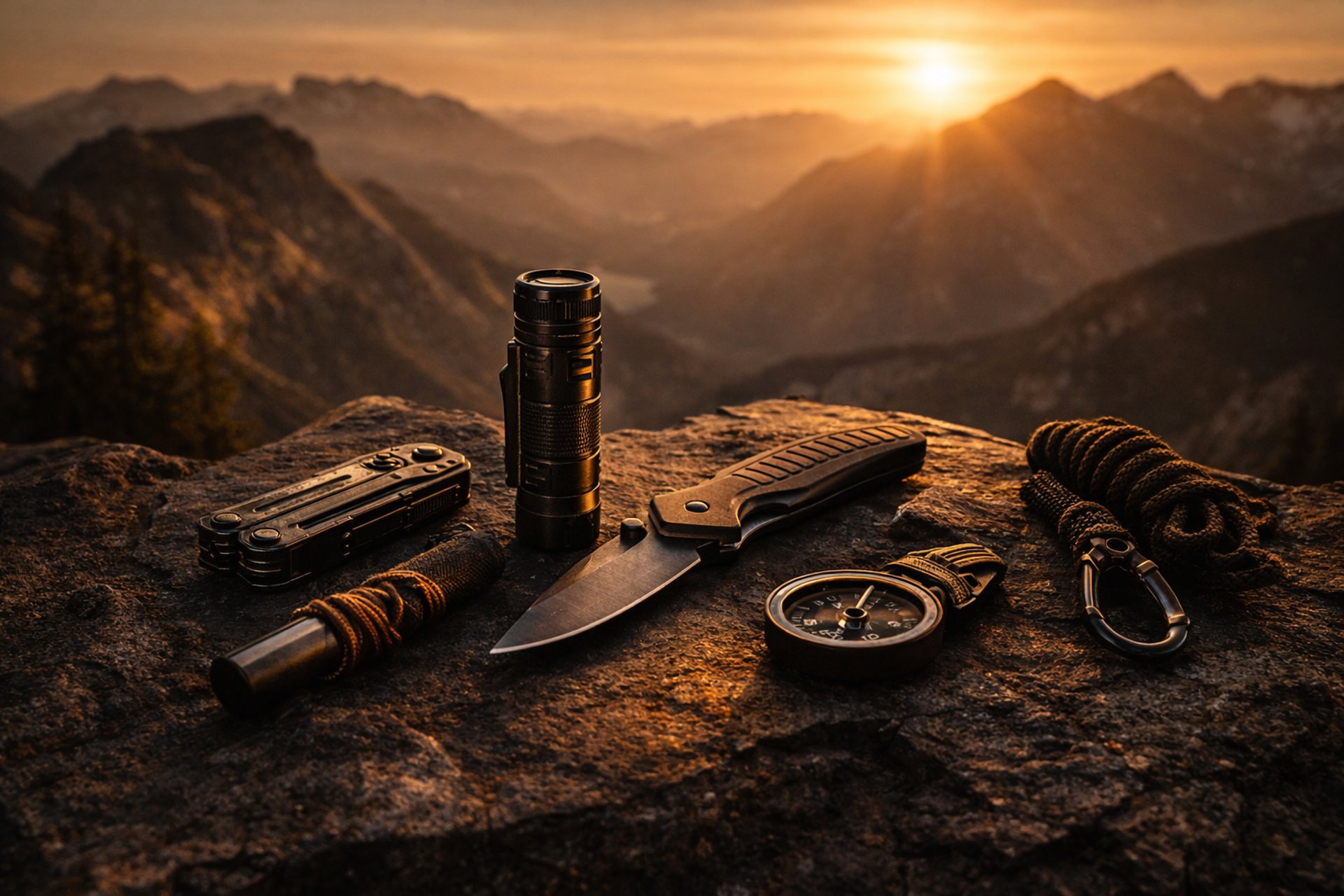
How Much Should an EDC Loadout Cost?
Discover the ideal EDC loadout cost balancing functionality and budget with tips on durable, affordable gear for everyday use.
LOADOUTSEDC TUTORIALS
The EDCBuzz Editorial Team - Led by AJ “Buzz” Eichman
6/11/20268 min read
Everyday carry gear is a bit like socks: most of us want something reliable, comfortable, and maybe even stylish enough that we don’t dread wearing them every day. But just like socks, the cost of an EDC loadout varies wildly depending on what you’re after. You can slap together a decent kit for pocket change if you don't mind frequent upgrades, or you can invest in premium pieces that outlast everything but your retirement plan.
The question is, how much should your EDC loadout cost to strike the right balance between real-world functionality and thoughtful budgeting?
After carrying different gear for weeks, sometimes months, the answer isn’t as straightforward as “buy the cheapest” or “go all-in on the high end.” It depends on what you’re carrying, how you use it, and what you consider worth the pocket weight.
If you're just getting started, the EDC Loadouts Guide and EDC Loadout Builder by Budget can help you build a kit that matches both your needs and your budget.
Let’s unpack what goes into the price tag of your everyday carry, breaking down costs, quality, and a healthy dose of practical advice.
Quick Verdict
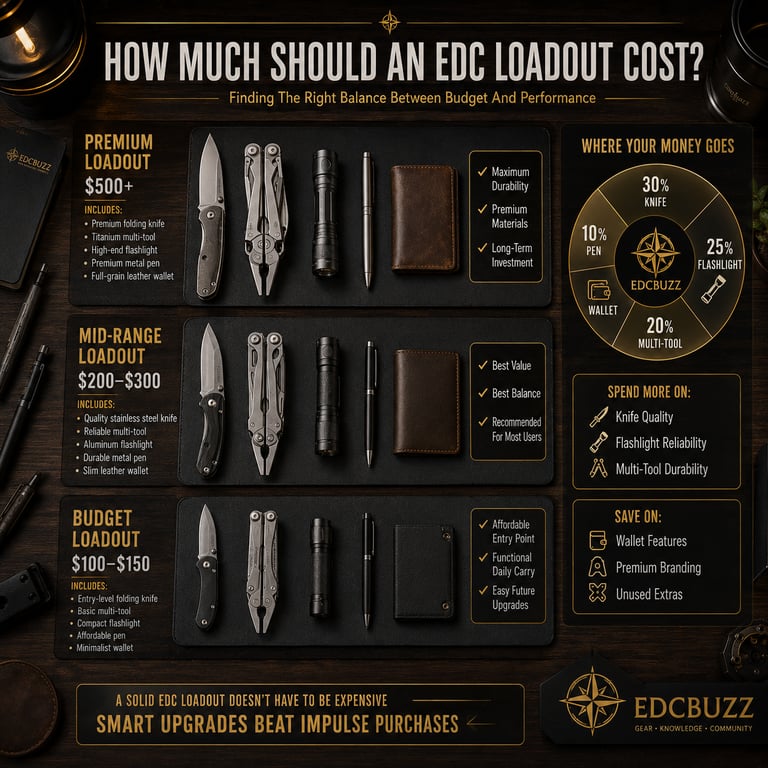
A solid, functional EDC loadout usually falls between $100 and $300.
Investing in durable materials like stainless steel blades or aluminum bodies pays off over time.
Budget gear is fine for starting out but expect to upgrade sooner rather than later.
Mid-range gear tends to deliver the best balance between price, performance, and comfort.
What Makes Up a Typical EDC Loadout?
Before diving into numbers, it’s important to know what you’re budgeting for. An everyday carry loadout generally includes a mix of tools designed to solve daily nuisances and occasional challenges. The most common essentials include:
A utility knife or folding knife for opening packages, cutting cords, or prepping snacks.
A flashlight for finding things in the dark or signaling in low-light situations.
A multi-tool that often includes pliers, screwdrivers, and sometimes scissors.
A pen for jotting notes or signing receipts.
A wallet or cardholder to organize IDs, cash, and cards comfortably.
Sometimes keys, tech gadgets, or even a small notebook make the cut.
Prices for each of these items can vary drastically depending on the manufacturer, materials, and features. Setting realistic expectations for cost helps keep your EDC loadout practical rather than a wallet-heavy experiment.
For people focused on keeping costs down, Budget EDC Loadouts provide a useful starting point.
Price Ranges for Core EDC Gear Items
Taking a closer look at key EDC components lets you see where the dollars go and what you get for them.
Knives
EDC knives range from basic around $20 to high-end models reaching $200 or more. Budget knives typically use stainless steel with modest edge retention and sometimes less refined fit and finish. Mid-range knives balance sharper steels, smoother opening mechanisms, and ergonomic handles. Premium knives may feature top-grade steel, titanium frames, and precision engineering with lifetime warranties.
Flashlights
Entry-level flashlights might cost $15 to $50 and offer reasonable lumen output suitable for everyday use. Mid-tier lights between $50 and $150 often feature better battery efficiency, weather resistance, and sturdier construction. Premium models might sport advanced LEDs, such as Nichia or Cree XHP, tactical-level durability, and multiple output modes. Over time, a flashlight that won’t fail when you need it is worth the extra few bucks.
Multi-tools
Multi-tools start around $20 for basic plier-based designs with the essentials and can climb north of $150 for full-featured versions crafted from stainless steel or titanium. Mid-range tools generally provide better spring tension, more tools, and improved ergonomics. Like knives, higher-end multi-tools come with robust warranties and materials that age well with use.
Pens and Wallets
EDC pens and wallets often fly under the radar in cost discussions but add up nonetheless. A reasonable pen for everyday use might run between $10 and $40. Durable wallets crafted from genuine leather or carbon fiber materials sit in a $30 to $100 range, with premium brands charging more for craftsmanship and material rarity.
Material and Construction Quality Impact on Cost
After carrying many iterations of similar items, one thing becomes obvious: materials matter almost as much as brand reputation. A stainless steel knife you can sharpen easily and won’t rust keeps working longer, even if it cost a little more upfront. Aluminum flashlight bodies strike a good balance between weight and strength, and titanium multi-tools offer amazing longevity with minimal corrosion.
However, top-tier materials come at a cost—and don’t assume price alone guarantees quality. Some brands charge a premium for name recognition, while others quietly produce excellent gear from proven materials without the hype.
The key is knowing which material properties truly impact performance and durability for your specific needs. A budget aluminum pen may be just fine for your daily scribbles, but a plastic pen likely won’t last past a few drops or pocket runs.
Balancing Affordability and Longevity in EDC Gear
If you’re like me, your EDC items live in pockets, bags, or belt clips, which means they encounter daily wear and tear—jostling, bumps, occasional drops, and maybe a rogue coffee spill or two. The novelty of a flashy new gadget fades quickly if it doesn’t stand up to that everyday abuse.
Aiming for mid-range gear often makes sense. It’s where you get performance improvements and better materials without feeling like you’ve just bought a small car.
For example, a $50 knife with solid steel and a reliable locking mechanism will out-perform a $20 model in real tasks and won’t frustrate you with dull edges or flimsy handles. Similarly, a $70 flashlight will provide enough brightness, battery life, and durability for everyday use without demanding special care.
Sure, premium gear shines in fit, finish, and features, but unless you’re relying on your loadout for very specific professional reasons, that extra $100 to $300 per item might not bring daily returns worth the splurge. If your work demands tougher gear, comparing options such as the Best Budget Maintenance Tech EDC Loadout and Best Budget Office Worker EDC Loadout can help show where spending more actually makes sense.
On the other hand, if your budget is tight, starting with smart, affordable EDC gear lets you get comfortable carrying and using tools that fit your routine—and gives you time to learn which items deserve upgrading.
Common Budget Mistakes and How to Avoid Them
There are traps to watch out for if you want to avoid constant frustration or wasted money with your EDC gear:
Assuming the cheapest items perform as well as more expensive ones. A $15 knife may feel fine at first, but poor steel and construction usually show after a few uses.
Overloading your loadout with extras that add bulk and cost but little practical benefit. Every item should have a clear purpose and justify the pocket real estate.
Ignoring materials and construction quality can lead to premature wear, causing you to replace gear frequently—negating any upfront savings.
Prioritizing price over comfort. A heavy flashlight you want to toss out of your pocket after a few hours isn’t a good deal, no matter the cost.
Skipping research and reviews. Real-world user feedback often highlights flaws you won’t spot from specs alone.
Avoiding test or hands-on use before committing to a purchase. Different grips, sizes, and interfaces can make or break your carry comfort over time.
Many people also skip the planning stage entirely, which is why understanding How the EDC Loadout Builder Works can help avoid expensive mistakes.
Recommended Budget EDC Loadout Examples
If you’re just starting out or tightening your everyday gear budget, here’s a lively example to keep your costs sensible and your pocket happy:
Knife: A $40 to $60 folding knife with a decent stainless steel blade and secure locking.
Flashlight: A $30 to $50 aluminum-bodied light with at least 100 lumens and multiple modes.
Multi-tool: A reliable $40 basic multi-tool from a trusted brand offering pliers, blades, and screwdrivers.
Pen: A $15 pocket pen with metal construction and a smooth ink refill.
Wallet: A $30 minimalist leather or synthetic cardholder focused on slim profile and durability.
This setup typically lands under $200, providing functional tools without overspending, and avoids frustrations tied to low-end gear that falls apart or feels clunky.
Over time, you might swap individual items for higher quality as needed, but the foundation remains sound. If you're trying to stay under a specific budget, How to Build an EDC Loadout on a Budget offers additional strategies.
Upgrading Your EDC: When and What to Invest In
It’s tempting to buy the best gear all at once, but experience has shown me that incremental upgrades lead to smarter spending and more satisfaction. Use each piece long enough to know what you want improved—whether that’s blade sharpness, grip comfort, button feel, or pocket presence.
Upgrade priority usually follows:
Knife: Because a good blade handles most daily tasks and bad steel ruins the mood fast.
Flashlight: Often next, since reliable lighting is invaluable after dark or during unexpected outages.
Multi-tool: As your needs get more specific, a tool suite tailored to your tasks can save the day.
Comfort items like pens and wallets come later, especially if your essentials already function well.
Replacing something just because it’s new or flashy rather than truly better is a mistake many make.
If your gear still performs, carries well, and feels good in the hand after weeks or months, that’s usually your cue to hold steady. When you are ready to spend more, What Should You Upgrade First in an EDC Loadout? can help prioritize those purchases.
Your profession can also influence where upgrades provide the biggest benefit, which is one reason Why Your Job Should Influence Your EDC Loadout is worth considering before opening your wallet.
Frequently Asked Questions About EDC Loadout Cost
What is a reasonable budget for a beginner EDC loadout?
For those just starting, between $100 and $200 can cover essential gear with decent quality, including a knife, flashlight, multi-tool, pen, and wallet. This range balances affordability with functionality.
How does material choice affect EDC gear price and durability?
Materials like stainless steel, aluminum, titanium, and carbon fiber typically raise costs but increase durability and reduce weight. Lower-cost plastics or low-grade metals might save money upfront but often wear out faster.
Can I get a high-quality EDC loadout under $200?
Absolutely—but choose wisely. Prioritize reputable brands and materials known for durability. You might trade a few bells and whistles to stay within budget, yet still carry reliable tools.
Which EDC items should I prioritize in my budget?
Start with a solid knife and flashlight. They tend to see the most heavy use and benefit greatly from better steel and construction. Multi-tools and other accessories can follow.
Are expensive brands always better for everyday carry?
Not necessarily. Some premium brands deliver high-end materials and lifetime warranties worth the price, but many mid-range brands offer excellent value and performance for most users. Do your homework.
How often should I expect to replace or upgrade my EDC gear?
With quality gear, replacements might be every few years or more; with budget gear, every 6 to 12 months is common. Actual timing depends on daily use, care, and evolving needs.
What are some affordable brands known for good value?
Brands like Kershaw, Streamlight, Gerber, and Fisher Space Pen offer budget-friendly gear that balances price, quality, and warranty support nicely.
Does size and weight affect the cost of EDC gear?
Yes, especially with materials like titanium or carbon fiber, which reduce weight but increase price. Heavier, bulkier gear might cost less but wear on your carry comfort throughout the day.
Conclusion
The cost of an EDC loadout isn’t just about the sticker price—it’s about the investment in daily usefulness, durability, and comfort. A functional kit can start as low as $100 if you pick carefully, but expect to upgrade sooner or later unless you choose proven quality.
Mid-range gear often strikes the ideal balance where form meets function with a price that respects your budget and your pockets’ comfort.
Starting lean and upgrading thoughtfully keeps your loadout practical, reliable, and enjoyable to carry day after day. And if nothing else, you’ll have an excuse to crack a dry joke about how your knife costs more than your last date’s dinner. Not that I would know.
Contact@TheBuzzHQ.com
© 2026 EDCBuzz. All rights reserved.
EDCBuzz
Master everyday carry systems with clarity and precision. Built for real environments and practical use.
For educational purposes only.
General Inquiries: