
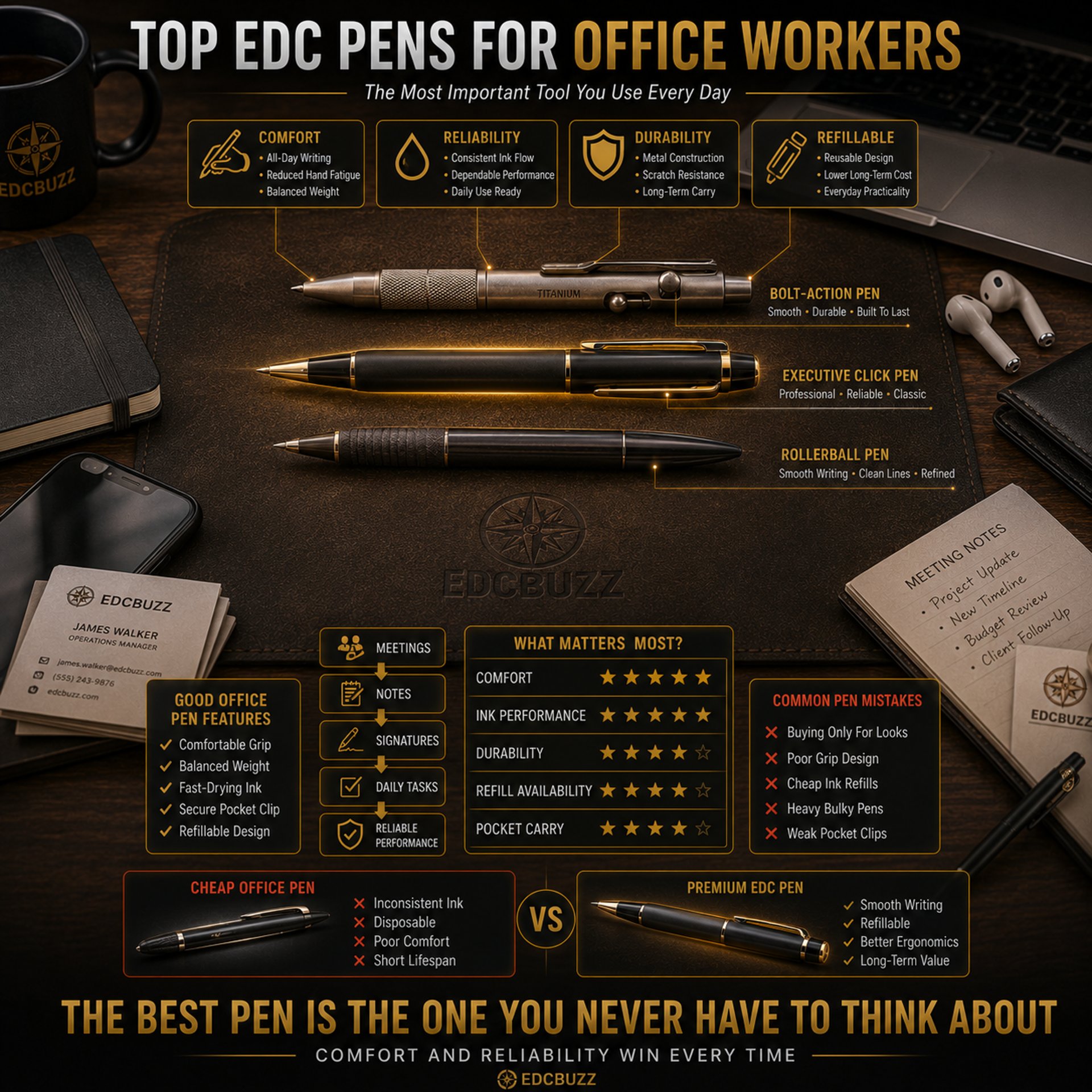
Top EDC Pens for Office Workers
Discover the best EDC pens for office workers, focusing on comfort, usability, and durability to enhance your daily writing experience.
LOADOUTS
The EDCBuzz Editorial Team - Led by AJ “Buzz” Eichman
6/11/20267 min read
Choosing the right everyday carry pen for office work is more involved than most people realize. A pen isn’t just a writing instrument; it’s a daily companion for meetings, note-taking, signing documents, and those inevitable sticky notes. Over weeks of carrying and using a variety of pens under normal office conditions, I’ve noticed how much comfort, usability, and reliability matter—beyond the initial flash of a slick design. After all, a pen that feels great the first day but slips, smudges, or cramps your hand during a lengthy meeting quickly loses its charm.
In this article, I’ll share those after-use insights to help office workers find the best everyday carry pens. We’ll cover comfort and grip, ink types, materials, refill options, and how size and clip design impact your daily carry. By the end, you should be able to pick a pen that not only performs well but also fits naturally into your work rhythm without becoming an overlooked annoyance.
Quick Verdict
• A smooth ink flow combined with fast drying is essential to avoid smudging on important documents.
• Comfort grips and balanced weight directly affect how long you can write before your hand reminds you to take a break.
• Durable materials like metal bodies or high-quality plastics ensure your pen survives daily carry without looking worse for wear.
• Refillable pens not only save money but reduce waste, making them smart long-term office companions.
Why Comfort and Usability Matter in Office EDC Pens
If you write as much as most office workers do, a pen that feels awkward or heavy becomes a daily nuisance rather than a tool. After several weeks with different pens, it’s clear that grip comfort isn’t just a bonus—it’s vital. Pens with no ergonomic consideration can quickly lead to finger fatigue, especially during extended note-taking or signing sessions.
Beyond grip, the pen’s weight distribution plays a quieter but no less important role. A pen too light might feel insubstantial, leading to uneven pressure and inconsistent lines, while overly heavy pens cause hand strain after an hour or two. Ideally, a pen settles neatly in your dominant hand, balanced enough that you hardly notice its weight after a little use—unlike the pen you forgot about in your back pocket until you had to jump up from a chair.
Many office professionals discover these same comfort factors when building a complete Work EDC Loadouts setup or comparing options inside the EDC Loadout Builder by Budget.
Ink Types Explained: Ballpoint vs Gel vs Rollerball
Understanding ink types is more useful after living with a pen than at the point of purchase. Ballpoint inks tend to be oil-based and thick, which translates to reliable and smudge-resistant writing, though sometimes with a little more pressure needed. Over time, that increased pressure can become noticeable, especially during long writing sessions.
Gel pens offer a smoother, more fluid writing experience with generally more vibrant ink colors, but their water-based inks take longer to dry. This means smudging can be a problem for left-handed writers or those jotting notes quickly. Rollerball pens sit somewhere in between, combining fluid ink flow with quicker drying than gels but can still be prone to occasional smears.
The key takeaway after weeks of use is that your choice should balance writing speed and ink smudge risk. If your workflow requires fast note-taking with minimal drying time—think signing forms or jotting a quick memo—ballpoints often edge out gels. On the other hand, if smoothness and ink vibrancy are higher priorities, gels can be worth the manageable trade-off.
Materials and Build Quality for Durable Office Carry
Quality materials are easy to overlook until your pen stops working or looks battered after a month in your pocket or bag. Metal-bodied pens tend to offer solid durability and usually have a weight that quietly speaks of quality and longevity. They settle into daily use easily, which is usually where better designs start to stand out.
High-quality plastics and resin materials can also perform well, especially if the pen has a well-tuned balance and feel. The trade-off is often in scratch resistance and weight consistency. Cheaper plastics may feel lighter but can warp, crack, or fade after weeks in a pocket alongside keys and other incidental phone-dialing hazards.
Clip design and construction count too. A loose clip means your pen won’t stay secure in your shirt pocket, while a tightly sprung but sharp-edged clip will eventually rub the fabric or dig into your skin. A good clip is one you notice only when you need it, never when you don’t.
Professionals who prioritize premium writing tools often end up comparing options found in both the Best Budget Office Worker EDC Loadout and Best Premium Office Worker EDC Loadout.
Refillability and Cost Considerations
Aside from comfort and ink, one less flash but more practical factor is refill availability. Few things are as disappointing as falling in love with a pen that demands obscure or expensive ink cartridges. Over time, refills become an invisible but regular expense and hassle.
Refillable pens generally pay for themselves quickly and cut down on disposable plastic waste—a silent win for your wallet and the planet. Twist, click, and cap top refill mechanisms each have their loyal fans, but the key is ease of refill without needing to access a rare specialty store.
Choosing pens with widely available refills means you’ll avoid interruption when that last drop of ink runs dry mid-signature.
Pen Size and Carry Options for Office Workers
Size and carry are about more than just pocket space; they affect pocket feel and accessibility during the day. Pens that are too long can poke out awkwardly or get lost under keys and wallets, whereas overly short pens might sacrifice writing comfort for compactness.
After use, pens around 5 to 6 inches long tend to balance portability with enough length for controlled, fatigue-free writing. Diameter and grip texture again matter here—too chunky, and your pen becomes noticeable in your shirt or pants pocket; too slim and it slips or feels like it might break with a firm grip.
If you regularly carry a notebook or planner, consider clip strength and how much of the pen sticks out. A well-designed clip means no more fishing around the bottom of a bag or catching on pages when you pull your notebook out quickly.
Many of these same carry considerations appear in Minimalist Office EDC vs Traditional EDC, where pocket comfort often becomes one of the deciding factors.
Top Pens for Everyday Office Use: Features and Performance
The best pens for office carry bring together those small details you only notice after real time — smooth ink that doesn’t smear, a grip that doesn’t fatigue your fingers, and a balance that becomes part of your hand’s muscle memory. The perfect pen should disappear into the background, letting your thoughts flow without constant adjustment.
Some standout features to seek:
Smudge-resistant ink that dries quickly enough to keep paperwork neat
Soft yet firm rubber or silicone grips to reduce finger strain over long meetings
Durable metal or high-grade plastic construction to withstand pocket life without scratches or dents
Refill options that are standard and cost-effective to avoid interruptions
Balanced weight and length for effortless writing
A clip that holds securely without damaging fabric or skin
Once you’ve found a pen ticking these boxes, neither flashy design nor bold colors matter nearly as much. After all, an unseen pen that works well beats a visible one that nags you every time you pick it up.
Common Mistakes When Choosing Office EDC Pens
One of the most frequent missteps is buying based solely on looks or brand without considering practical use. A pen that looks stunning on a desk but slips constantly or causes hand cramps will sooner or later get tossed aside.
Ignoring ink type and drying time also leads to messy notes and smudged signatures, especially for lefties or fast writers. Bulkiness or overly heavy pens are another trap—what feels solid and impressive at first often wears down comfort as the day goes on.
Another often missed detail is refill availability. A pen with no accessible or affordable refills becomes a one-and-done purchase rather than a daily carry tool.
Lastly, neglecting clip design and overall size can leave you with a pen that either drops out of your pocket or digs into your side whenever you sit down. Yes, it’s a small thing, but after a week, it’s not so small anymore.
These same mistakes are common among people who are still figuring out How to Build a Professional EDC Loadout and deciding What Should You Upgrade First in an EDC Loadout?
Frequently Asked Questions
What is the best type of ink for office EDC pens?
Ballpoint ink is typically best for quick drying and smudge resistance, making it ideal for most office tasks. Gel ink offers smoother flow but can smudge if you’re left-handed or write quickly.
Which materials offer the best durability for office carry pens?
Metal bodies—especially aluminum or stainless steel—offer excellent durability and balanced weight, though high-quality plastics with robust construction can also serve well.
Are gel pens better than ballpoint pens for everyday office use?
Gel pens provide smoother writing and richer color but tend to smudge more and require more careful drying. Ballpoints are generally more forgiving and reliable for fast, smudge-free office work.
How important is pen grip comfort for office writing tasks?
Very important. A comfortable grip reduces hand fatigue during extended writing sessions and helps maintain consistent control and neatness.
Can refillable pens save money compared to disposable ones?
Yes, refillable pens usually cost less over time and are environmentally friendlier, provided refills are easy to find and affordable.
What size pen is best for carrying in a shirt or pants pocket?
Pens around 5 to 6 inches balance portability and comfort well. Diameter should be slim enough not to feel bulky but substantial enough to hold with ease.
How do I prevent ink smudging when writing quickly?
Choose fast-drying inks like ballpoint, write with a lighter touch, and allow a moment for drying before stacking papers or sliding your hand over the ink.
Are there specific EDC pens designed for left-handed office workers?
Some pens feature fast-drying inks and ergonomic grips angled to reduce smudging and hand strain, but the best choice often depends on personal preference and ink type.
Conclusion
Finding the best everyday carry pen for office use isn’t about chasing the flashiest or most expensive option. It’s about settling into a writing tool that quietly supports your workday without calling attention to itself. After weeks of daily carry, the comfortable grip, smooth ink flow, balanced weight, and thoughtful clip design emerge as the real heroes.
Pick a pen that feels natural after a full day’s use, not just on day one. One that won’t drag down long meetings or leave your documents smeared. Invest in something durable and refillable—your hand, wallet, and desk will thank you. And remember, the best pen is the one you actually want to carry every day, not the one that sits forgotten until your last-minute meeting scramble. In the end, comfort and reliability beat novelty every time.
Contact@TheBuzzHQ.com
© 2026 EDCBuzz. All rights reserved.
EDCBuzz
Master everyday carry systems with clarity and precision. Built for real environments and practical use.
For educational purposes only.
General Inquiries: