
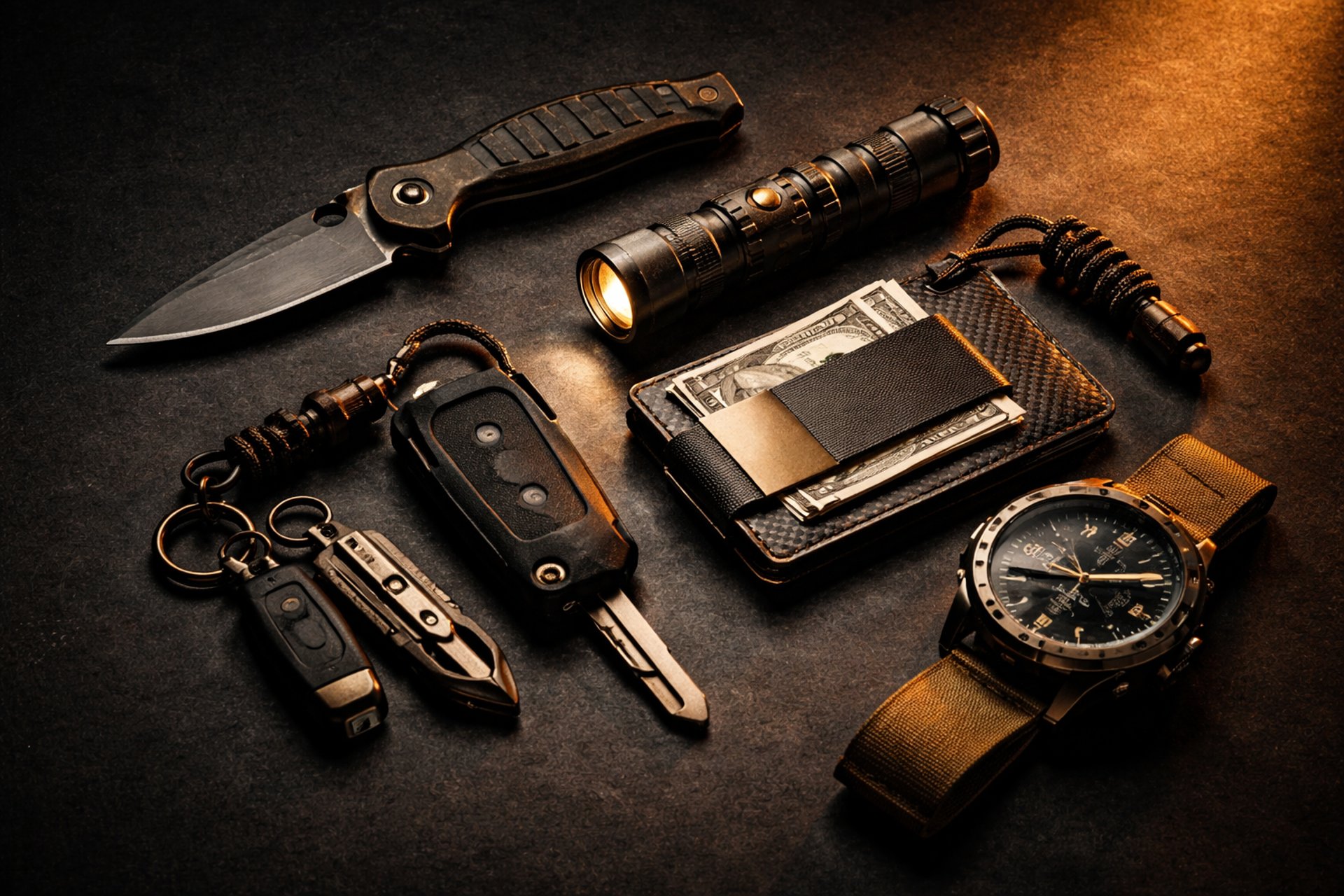
Minimalist Office EDC vs Traditional EDC: Choosing the Right Everyday Carry Setup
Explore the minimalist office EDC essentials versus traditional EDC gear to find the perfect everyday carry setup that suits your lifestyle and pocket comfort.
LOADOUTS
The EDCBuzz Editorial Team - Led by AJ “Buzz” Eichman
6/11/20267 min read
There’s a bit of a balancing act when it comes to everyday carry gear—how much do you really need? For folks navigating professional environments, the minimalist office EDC has been gaining traction, carefully trimmed down to essentials that slide quietly into a pocket without rattling a meeting or spilling into a keyboard tray. On the flip side, traditional EDC setups tend to pack a bit more punch, with a wider range of tools suited for everything from opening packages at work to impromptu weekend repairs and outdoor tasks. After living with both styles for a solid stretch, I can say choosing between minimalist office EDC and traditional EDC isn’t just about tools — it’s about how those tools fit your lifestyle, and how often you want to be reminded you’re carrying them. Whether you're building your first setup with the EDC Loadouts Guide or customizing recommendations through the EDC Loadout Builder by Budget, understanding the differences is the first step.
Quick Verdict
Minimalist office EDC shines for streamlined, professional carry — lightweight and compact without sacrificing essential function.
Traditional EDC offers broad versatility and durability, but often at the cost of bulk and pocket comfort.
Material choices in minimalist setups often favor sleek, ultra-light metals and plastics that stay visually discreet, whereas traditional gear leans into thicker stainless steel and more robust build quality.
Your choice boils down to daily task demands, pocket space tolerance, and whether you want your gear to fade quietly away or stand ready for any curveballs.
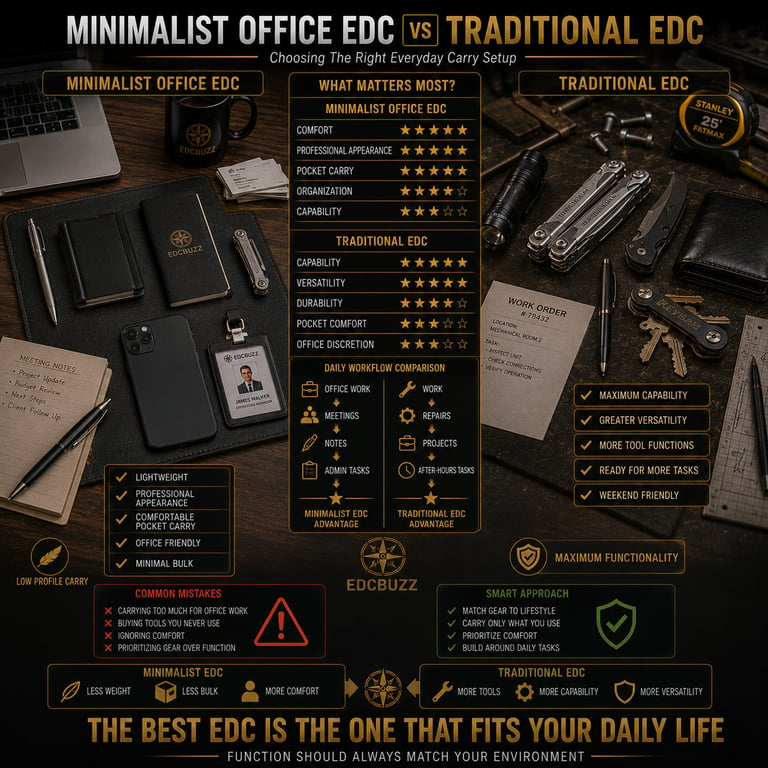
Defining Minimalist Office EDC and Traditional EDC
It’s worth starting with the basics: minimalist office EDC isn't about maxing out on gear but paring down to the tools that genuinely see use in a professional or urban environment. Think slim pens, slim wallets, compact multitools, and maybe a neat little flashlight that won’t flash the office lights during your next Zoom call. The focus is on discreet, lightweight carry that doesn’t scream “look at me” or rub against the fabric of your dress pants awkwardly.
Traditional EDC setups, by contrast, are a bit more forgiving about size and weight because they’re meant for versatility. These might include larger folding knives with secure locking mechanisms, multi-tools with all the fix-it functions you can imagine, durable flashlights, and other tools geared for random tasks—both in and out of the office. You won’t mind the gear being a bit chunkier if it means you can handle whatever life throws your way. The contrast becomes especially apparent in an Office Worker vs Executive EDC Loadout.
Key Components of Minimalist Office EDC
After a couple of weeks sliding minimalist office gear into various pockets—jeans and dress alike—you start noticing which tools really do their job without becoming annoying. One standout is the pen: a slim, balanced pen that writes smoothly and doesn’t snag your pocket is invaluable. Cheap or bulky pens show early and often as they poke or bulge, quickly earning a side-seat in your bag instead. If writing is a major part of your day, Top EDC Pens for Office Workers is worth exploring.
Minimalist wallets earn their keep when they hold the essentials—ID, a few cards, some cash—but refuse to turn your front pocket into a brick. Materials such as thin leather or sturdy nylon blends tend to age well and weight little, which helps your carry stay light. An equally slim and discreet multitool, maybe a pocket pry bar or a tiny screwdriver set, rounds out the essentials without tipping the scales.
Many of these items appear in both the Best Budget Office Worker EDC Loadout and Best Premium Office Worker EDC Loadout, depending on your preferences and budget.
Typical Gear in Traditional EDC Setups
Traditional EDC gear often reads like a “just in case” toolkit. Larger folding knives with ergonomic grips hold up well when you need to cut heavier materials, and you notice how a thick grip feels better when holding the knife for longer tasks, though it’s a tradeoff versus carry comfort.
Multi-tools here tend to be substantial—think full-size versions with pliers, scissors, wire cutters, and a slew of screwdriver bits. There’s also usually a flashlight built for high output and durability, sometimes at the price of pocket bulk. These tools settle into your day when versatility wins over discreteness, even if you occasionally forget exactly which pocket you stashed that three-inch blade in until you go to sit.
Material and Design Differences
One subtle detail that only becomes clear after weeks of use: material finish. Minimalist office carry tools often sport matte or subdued finishes specifically to avoid glare and keep things looking sharp but not flashy. The light metals like titanium or anodized aluminum keep weight down, especially appreciated by anyone accustomed to the slight but consistent reminder of a heavier pocket load.
Traditional EDC gear often takes up a thicker, sturdier material, like beefy stainless steel, that you can really feel when gripping the tool. This adds durability and ruggedness for more physically demanding tasks, but overtime, you notice the extra heft — it’s not a dramatic annoyance, but definitely “present” in a way minimalist gear tries not to be.
Comparing Usability and Comfort
Comfort is where the daily lived experience separates the two styles cleanly. Minimalist office EDC is designed to slip unnoticed into pockets, which means after a day of sitting, standing, and moving meetings, you barely catch the tools shifting around. Grip fatigue is rarely a factor since the tools are on the smaller side or double as office accessories, so you don’t spend long periods holding them.
Traditional EDC gear feels more substantial under hand, which is welcome if your tasks run longer or tougher. But that same heft becomes noticeable, especially in standard office attire, where bulkier tools can create awkward bulges or pull uncomfortable wrinkles in pants pockets. It settles into daily use easily for outdoor or casual dress days but is less forgiving under a crisp dress code.
If you're still deciding whether an office carry setup makes sense at all, Do Office Workers Really Need an EDC Loadout? covers many of the same concerns from a practical perspective.
Choosing the Right Setup for Your Lifestyle
Here’s the rub—no carry setup is objectively “better.” If your day mostly revolves around tapping at a keyboard, scribbling notes, or the occasional minor fix, minimalist office EDC is a solid bet. It respects your wardrobe and meeting etiquette, and you start appreciating gear that disappears rather than demands attention.
If your routine swings between office and hands-on tasks, or you simply want to be ready for varied scenarios—maybe cutting a box after work or tightening a screw during weekend projects—traditional EDC setups offer peace of mind and functionality. Just be ready to accept the trade-offs in bulk and sometimes pocket discomfort.
Professionals looking to refine their setup often move on to How to Build a Professional EDC Loadout or compare their carry to What Executives Actually Carry Every Day.
Common Mistakes When Selecting EDC Gear
One of the bigger traps I've seen is overloading a minimalist office setup with gear that doesn’t play well with minimalism’s ethos. Adding a heavy multi-tool or a large knife “just in case” can turn an otherwise sleek setup into a pocket workout, and that defeats the purpose.
On the traditional EDC side, the opposite pitfall is picking gear that's too large or heavy for comfortable daily pocket carry—just because it looks tough or has all the bells and whistles. You don’t want to dread carrying something every day because your legs remind you with every step.
Another subtle, but frequent error is ignoring your work environment’s dress code or carry restrictions. A stealthy, matte finish pen or tool might pass unnoticed, but a shiny, bulky clip-on multitool probably will not. I found that thinking through where and when you’ll carry these tools is half the selection battle.
Frequently Asked Questions
What items are essential for a minimalist office EDC?
Essentials tend to boil down to a well-designed slim pen, a compact wallet holding only what you really need, and a subtle multi-tool with just enough functionality for minor fixes—think small screwdriver or pry tool. Bonus points if they fit comfortably in your dress pants without creating awkward bulges.
How does traditional EDC differ in functionality from minimalist setups?
Traditional EDC setups usually include larger knives, fully featured multitools with pliers and cutters, plus more robust flashlights. They prioritize versatility across different situations, from repairs to outdoor tasks, at the cost of some extra weight and bulk.
What materials are best for office-friendly EDC tools?
Lightweight metals like titanium and anodized aluminum are popular for office carry due to their durability and subtle finish. Leather or slim synthetic wallets work well for comfort and style, while matte or subdued tool finishes help avoid attracting unwanted attention.
Can minimalist EDC gear handle outdoor or emergency tasks?
Minimalist gear can manage light outdoor or emergency tasks, but it’s generally not designed for heavy-duty use. These setups focus on daily practicality and discreet carry, so if your activities call for rugged, diverse tools, traditional EDC is better suited.
How do I balance tool size with pocket comfort?
The best balance comes from evaluating how often you’ll use each item against the physical cost of carrying it. Smaller, lighter tools excel in office environments, while bulkier gear makes sense if you require more functionality regularly. Testing gear during your daily routine is the only real way to know.
Are multifunction tools practical for office carry?
They can be, if they’re streamlined for essentials and don’t get too bulky. Look for versions with only the tools you need most—often fewer bits, rather than a full set. Otherwise, a multi-tool can turn from utility to nuisance quickly in a professional setting.
What are common pitfalls when switching from traditional to minimalist EDC?
A frequent misstep is keeping old habits and trying to carry too much. Minimalism demands cutting down sharply—not just swapping tools. Also, some traditional tools might look minimal but feel bulky in real life, so testing physical comfort is key.
How often should I reassess my EDC setup?
Every few months is a good rule of thumb, especially if your job or lifestyle changes. Gear that fit perfectly last year might feel off today, and frequent reassessment keeps your setup aligned with your actual needs.
Practical Conclusion
If you’re after carry that fades gracefully into the background while keeping you prepared for office life, minimalist office EDC hits the mark with its light footprint and refined aesthetics. But if you need tools that can weather broader scenarios—think more hands-on projects or spontaneous outdoor tasks—traditional EDC brings reliable capability, even if there’s a little pocket “presence” to get used to.
With both setups, the key isn’t just the gear itself, but how it fits your habits, your workday rhythm, and your comfort. That’s where the field testing really counts: finding tools you don’t just carry but live with. Because if your everyday carry setup starts feeling like dead weight after lunch, you’re carrying the wrong gear. And that’s the kind of dad joke I promise to avoid—unless you ask nicely.
Contact@TheBuzzHQ.com
© 2026 EDCBuzz. All rights reserved.
EDCBuzz
Master everyday carry systems with clarity and precision. Built for real environments and practical use.
For educational purposes only.
General Inquiries: