
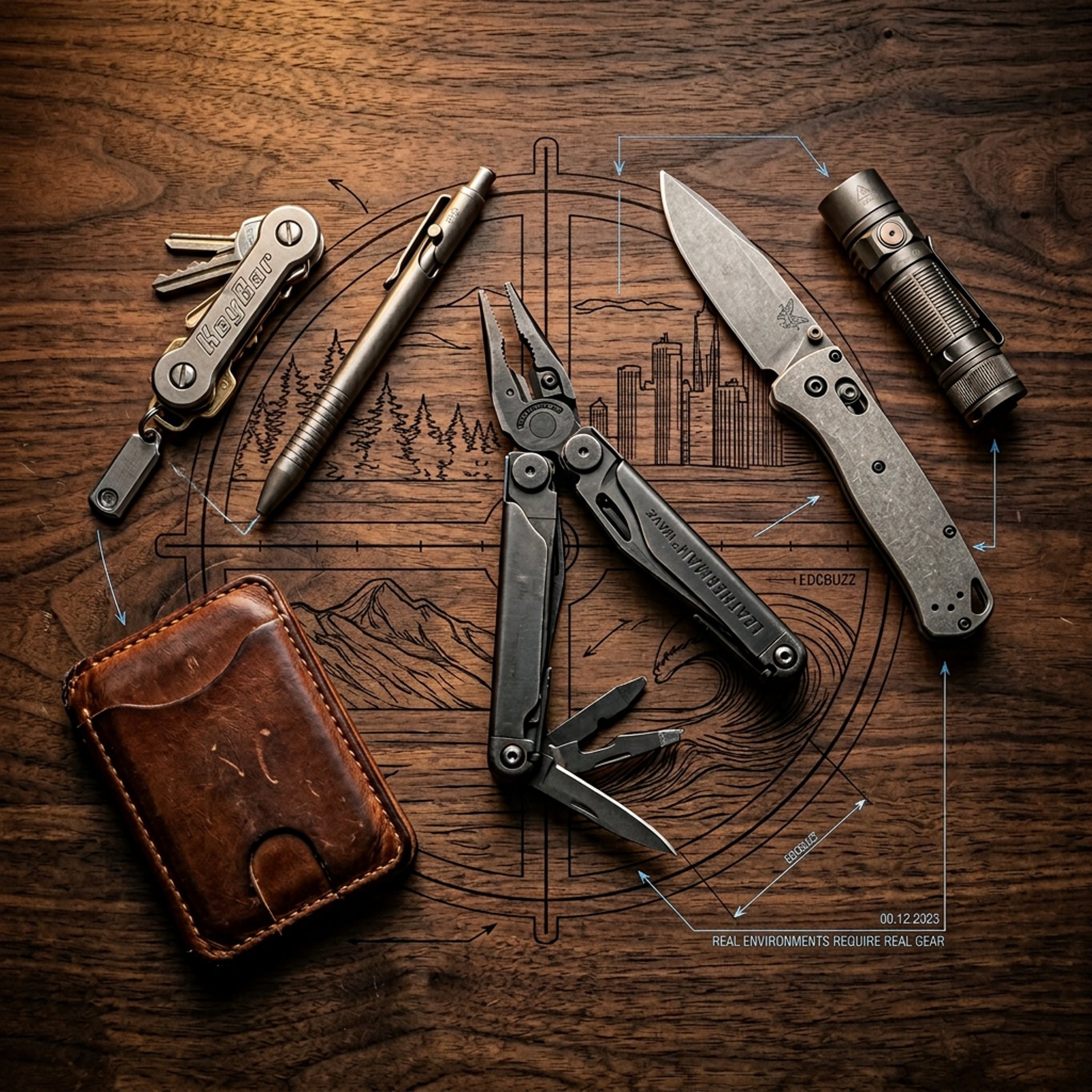
Multitool vs Knife for EDC: Which One Should You Choose?
Explore the key differences between multitools and knives to decide your best EDC tool. Versatility or cutting precision? Find out which suits your daily needs.
MULTI-TOOLS
The EDCBuzz Editorial Team - Led by AJ “Buzz” Eichman
4/18/20267 min read
Choosing the right everyday carry (EDC) tool often feels like facing an age-old question: Should you carry a multitool or an EDC knife? Both are undeniably practical, but they’ve got very different vibes and utilities when you get past the initial shine. After carrying both for weeks on end—not just to pose for pictures, but really living with them—I’ve picked up on the subtle differences that influence what you might want in your pocket every day.
In this article, we’ll break down how multitools and knives stack up in terms of usability, comfort, and overall practicality for daily tasks. Let’s cut through the noise and get down to what really matters when you’re deciding between these two staples of EDC gear. If you're comparing this within a broader setup, it helps to start with EDC Multi-Tools as the foundation.
Quick Verdict
Knives typically deliver more efficient cutting performance and deploy faster for dedicated slicing tasks.
Multitools bring versatility, packing multiple functions like pliers, screwdrivers, and scissors—but usually at the cost of extra weight and bulk.
Comfort and pocket feel lean in favor of knives, but multitools are unbeatable for spontaneous fixes and varied scenarios.
Your daily routine should steer your choice: if you mostly cut and slice, go knife; if your day calls for a mix of small repairs alongside cutting, multitool it is.
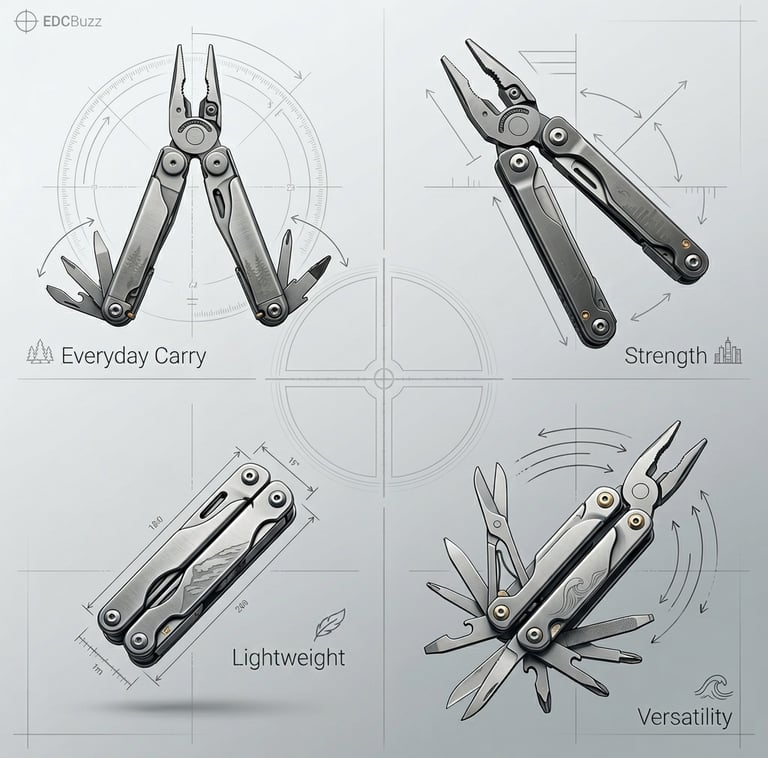
What Is an EDC Knife and What Is a Multitool?
At their core, both knives and multitools serve practical daily-use needs, but their design philosophies are distinct.
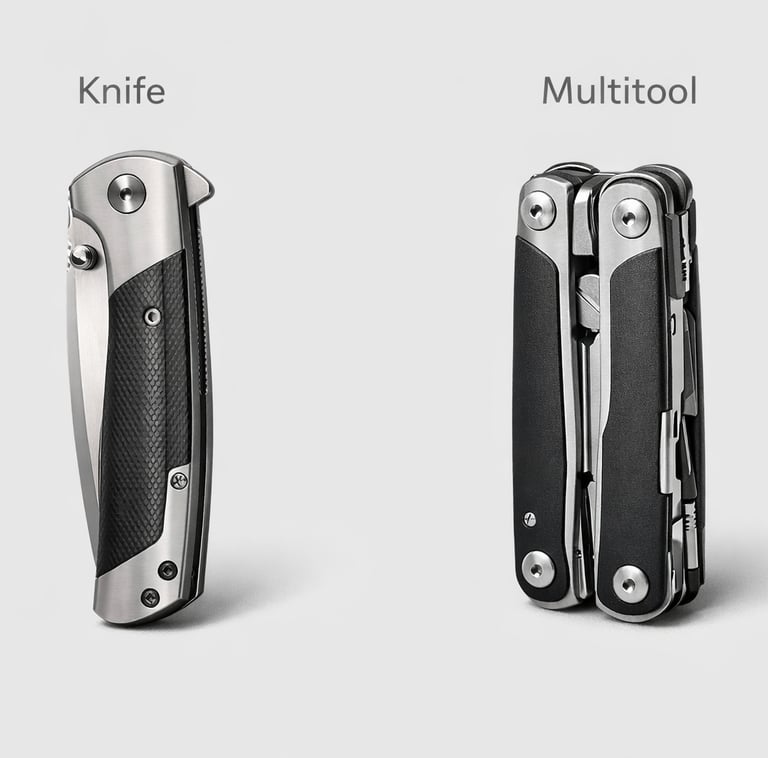
An EDC knife, typically featuring a sharp, dedicated blade, focuses on cutting tasks—whether it’s opening packages, prepping food, or slicing rope. The blade’s steel quality, locking mechanism, and handle ergonomics usually make it a specialized, straightforward tool designed for quick, reliable cuts.
A multitool, by contrast, carries not just a blade but also an array of other tools like pliers, screwdrivers, and scissors tucked into a compact package. It’s basically the handyman’s Swiss Army knife, designed to tackle a variety of small jobs without reaching for a separate toolbox. If you want a deeper breakdown of that side, see What Is an EDC Multitool.
The trade-off is clear: knives optimize for one thing—cutting. Multitools try to do several things, which means none of them excel quite like a dedicated tool would.
Key Functional Differences Between Multitools and Knives
After carrying both types daily, the differences become more than just theoretical—they’re felt in how the tools perform during typical tasks.
Cutting Performance
Knives usually come out ahead here. Their blades are generally longer, sharper, and cut smoothly thanks to better steel and edge geometry. The deployment mechanism—whether liner lock, frame lock, or slip joint—lets you open the blade quickly and get to work without fuss. After a few days, you notice the knife’s ease when slicing through cardboard or trimming rope. Multitool blades, often secondary tools themselves, can feel a bit cramped and less refined. They get the job done but lack that satisfying drag-free slice a quality knife delivers.
Versatility
This is multitools’ playground. The combination of pliers, screwdrivers, and sometimes even can openers means you’ve got a serviceable toolbox for small fixes on hand. It’s a bonus on hikes, at the office, or just handling minor maintenance without hunting for separate tools. If versatility is what you're after, something like Best EDC Multitools highlights the top all-around options.
The trade-off is you’re carrying extra weight, and the tools take a little more effort to deploy individually. Over time, you realize you use half the tools regularly and the rest rarely, but that versatility often justifies the bulk.
Deployment and Safety
Knives generally deploy faster, especially those with assisted opening or flipper tabs. Multitools require unfolding layers of tools, which slows immediate use but offers safety from accidental openings. Both typically include locking mechanisms, but knives tend to favor quicker action with comparable safety.
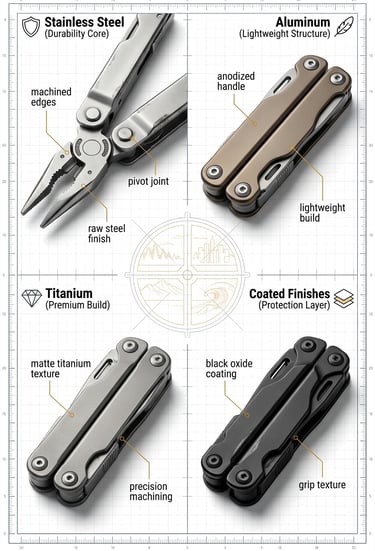
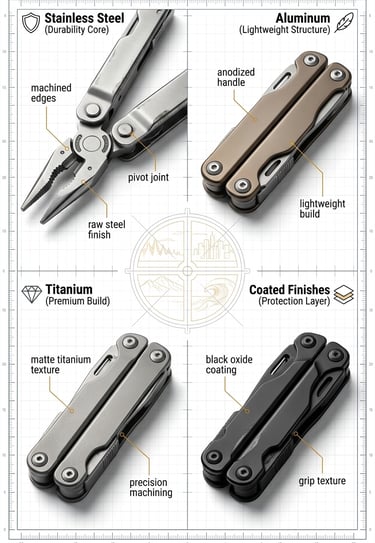
Material and Construction: Durability and Maintenance
Whether a knife or multitool, the steel choice is a critical factor over time. I’ve carried blades made from stainless steel alloys like 440C and VG-10, as well as premium varieties like S30V in knives, which hold edges longer and resist corrosion better. Multitools mostly use stainless steel for resilience across multiple implements, though their blades rarely reach the edge retention levels of specialized knives.
Over weeks, the importance of corrosion resistance becomes obvious. A multitool exposed to moisture during weekend hikes can develop patina or rust spots if it’s lower quality. Knives with high-carbon steel need more maintenance but reward you with sharper, longer-lasting edges once tuned.
The handles also matter. Knives with ergonomic scales reduce fatigue during repeated cutting, while multitools’ thicker, chunkier bodies can strain your hand if you’re forcing pliers or screws repeatedly.
Daily Carry: Weight, Size, and Comfort Considerations
Carrying these tools every day is where your pockets start talking back to you.
Knives usually sit slim and light in a pocket, sometimes light enough to forget they’re there—which is a good thing, unless you’re the type that misses their knife until it’s gone. Multitools, thanks to all those added tools, usually come with a weight penalty and occupy more volume. After a day with a multitool in your pocket, you might notice the subtle bulk, especially when sitting or bending.
Carrying methods also play a role. Knives are often clipped pocket-side, allowing quick deployment and reduced pocket bulk when seated. Multitools might be clipped or carried in a pouch, which adds handling steps but can protect your pants and the tool alike.
Performance in Real-World Tasks and Scenarios
Let’s talk about actual everyday jobs.
For cutting open packages, slicing food, and rope tasks, knives shine with fast deployment and clean cuts. I’ve found multitools’ blades adequate but slower to open, and sometimes just a bit too short or dull compared to my go-to knives.
On the flip side, multitools excel at quick repairs: tightening screws, clipping wires, or adjusting gear. On a long outdoor trip, having pliers and scissors alongside a blade means fewer tools in the pack and more improvisation options. If you're trying to stay budget-conscious while still getting solid performance, Best Multitool Under $50 is worth checking out.
In an office or urban setting, multitools offer unexpected handy functions like bottle openers or nail files—nice to have, but not critical daily. Knives in this environment take the role of straightforward utility without the bulk.
Common Misconceptions and User Mistakes
One common misstep is assuming a multitool’s blade matches up with a quality dedicated EDC knife. While multitool blades serve well in a pinch, expecting razor-sharp, thoroughly optimized cutting performance from them usually ends in mild disappointment.
Another is overpacking your EDC rig. Whether knife or multitool, carrying every conceivable tool or blade size ends up weighing down your pockets without practical benefit. It pays to be selective, carrying tools you truly expect to use.
Ignoring blade lock mechanisms or safety features can lead to headaches—knives that open too slowly or multitools with weak locks feel less secure and get neglected in favor of convenience. If you're comparing real-world durability and usability between popular models, Gerber Gear Truss vs SOG PowerLock gives a solid side-by-side.
Handle ergonomics and deployment speed also matter more than people give credit. A tool that’s painful to hold or slow to open quickly fades from use, no matter how shiny it looks.
How to Choose Based on Your Specific Use Case
To decide between a multitool and an EDC knife, start with what you do daily.
If your tasks revolve around slicing—packages, food prep, cutting zip ties—a knife that opens quickly and cuts cleanly will feel indispensable. Look for a blade steel that holds up to your environment and a handle that feels good in your hand during repeated use.
If your day includes frequent small repairs, adjustments, or outdoor adventures where you need pliers, screwdrivers, and scissors often, a multitool makes more sense. Just be ready for the added weight; it’s the price of versatility.
For some, carrying both is practical, but this doubles your pocket bulk. If you try this route, consider your carry comfort carefully.
Frequently Asked Questions
What are the main advantages of carrying a multitool over a knife?
A multitool offers a variety of tools—pliers, screwdrivers, scissors—in one package, which means you’re prepared for many small repairs or adjustments without carrying multiple separate tools.
Can a multitool replace an EDC knife completely?
Not entirely. While many multitools include blades, these knives usually don’t match the cutting performance or deployment speed of dedicated EDC knives.
Which materials are best for EDC knives and multitools?
High-quality stainless steels like VG-10, S30V, and 440C balance corrosion resistance and edge retention. Multitools commonly use durable stainless steel alloys designed for toughness across different tools.
How do I decide between a multitool and a knife for daily carry?
Assess your daily tasks: if cutting dominates, choose a knife. If your days demand varied tools like screwdrivers and pliers alongside cutting, a multitool is probably better.
What size should I look for in an EDC knife or multitool?
Size should fit your comfort and carry preference. Knives usually range from small folders to larger utility blades; multitools trend bulkier due to multiple tools. Consider pocket space and carry methods.
Are there multitools with high-quality, full-size knife blades?
Some premium multitools offer better blades than average, but even the best rarely reach the edge retention or ease of deployment found in dedicated knives.
What maintenance do multitools and knives require?
Regular cleaning, lubrication of pivots, sharpening blades, and protecting from corrosion keep both tool types in top shape.
Is it practical to carry both a knife and a multitool every day?
It depends on your needs and tolerance for pocket bulk. Carrying both offers versatility but requires balancing weight and comfort.
Conclusion: Which EDC Tool Should You Pick?
Living with both multitools and knives makes it clear: neither is right for every situation, but both excel in their domains. An EDC knife wins for clean, quick cutting and lightweight carry. A multitool impresses with versatility and readiness for unexpected fixes.
Your personal daily routine and tasks should guide your choice more than brand hype or flashy features. If you spend most of your day slicing and opening, the knife is your trusted ally. If small repairs, adjustments, or outdoor needs crop up regularly, a multitool is the way to go.
And if you can swing it—try them both on for size and feel. Sometimes, the best tool really is the one you carry every day without thinking about it. After all, the most expensive tool is the one left at home.
Contact@TheBuzzHQ.com
© 2026 EDCBuzz. All rights reserved.
EDCBuzz
Master everyday carry systems with clarity and precision. Built for real environments and practical use.
For educational purposes only.
General Inquiries: