
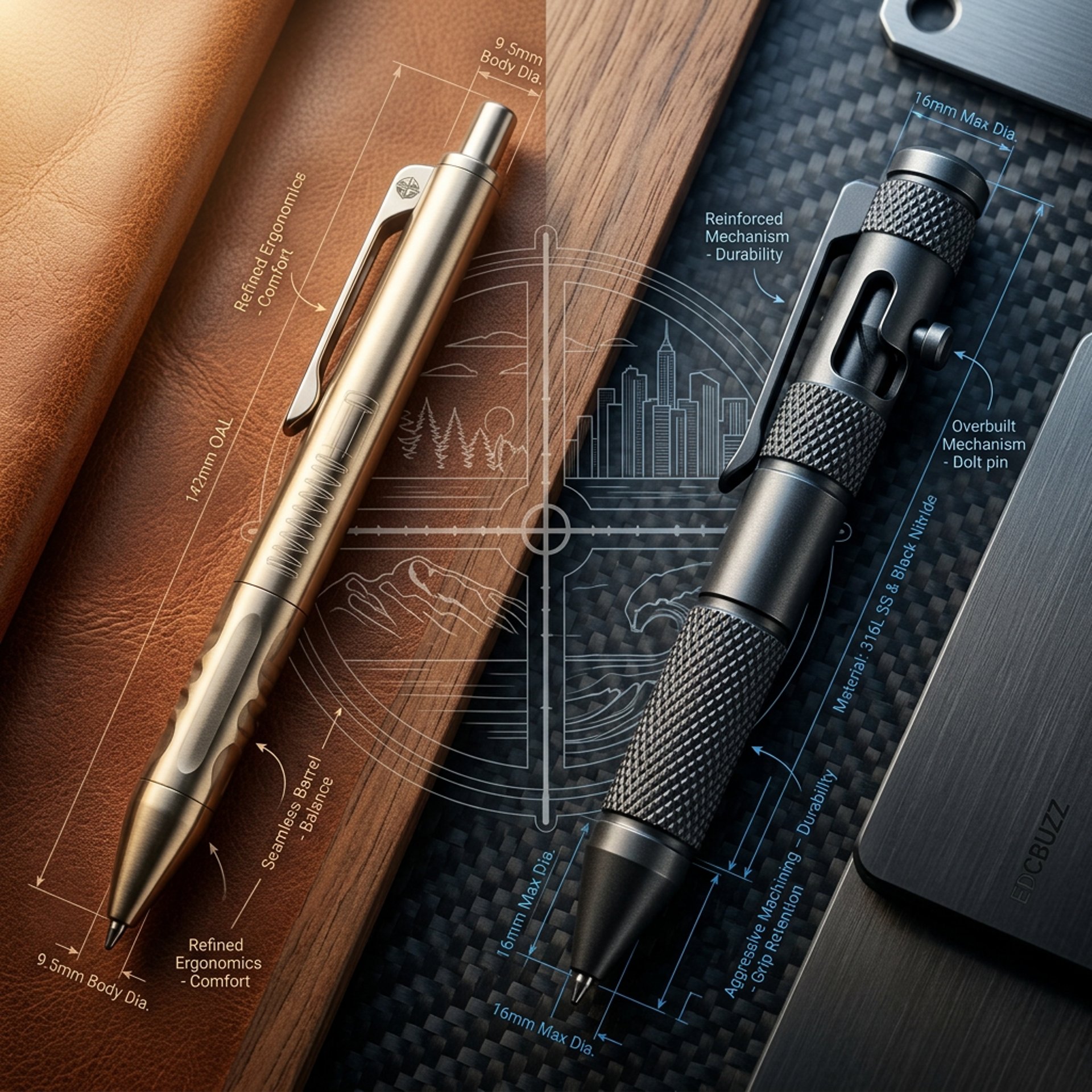
EDC Pen Materials: Titanium vs Steel
Explore key differences in titanium vs steel EDC pen materials, focusing on durability, weight, corrosion resistance, and everyday writing comfort.
EDC PENS
The EDCBuzz Editorial Team - Led by AJ “Buzz” Eichman
4/27/20267 min read
Selecting the right everyday carry (EDC) pen involves more than just nib size or ink type; the material used in the pen’s construction plays a crucial role in how it performs and feels day to day. If you’re building out a complete loadout, understanding how materials fit into the bigger picture of EDC Pens helps tie everything together. Titanium and steel are two of the most common metals found in quality EDC pens, each bringing a distinct set of material properties that affect durability, weight, corrosion resistance, and overall user experience. By diving into the science behind these metals, you can better understand why one might suit your daily writing needs better than the other. This guide dissects titanium vs steel in EDC pens, focusing on what really matters for practical, long-term use.
Quick Verdict
Titanium offers a lightweight yet strong option with excellent natural corrosion resistance, making it ideal for humid or outdoor environments.
Steel generally provides higher hardness and scratch resistance at a lower cost but tends to be heavier and may require coatings to prevent rust.
The weight difference between titanium and steel significantly impacts writing comfort and carry convenience, especially during extended use.
Finishing and manufacturing quality can influence corrosion resistance and tactile feel as much as the base material.
Overview of EDC Pen Materials
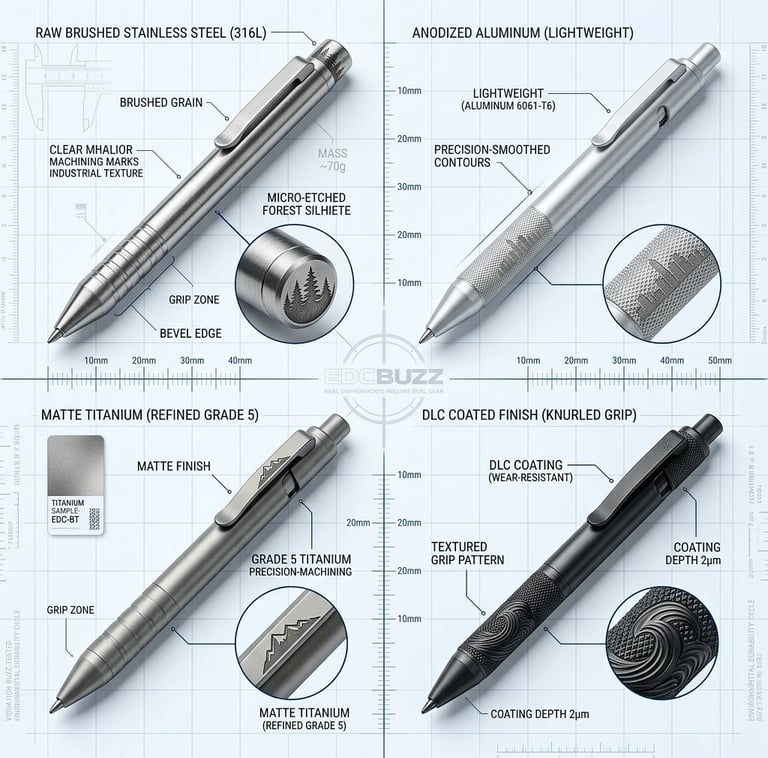
Everyday carry pens have evolved beyond simple writing tools into precision-crafted instruments engineered for reliability, comfort, and style. Among metals, titanium and steel stand out for their balance of strength, durability, and workability. Titanium is prized mostly for its high strength-to-weight ratio and corrosion resistance. Conversely, steel is admired for its hardness, scratch resistance, and lower price point. Understanding how each material behaves in a pen’s form factor provides clarity on their practical advantages and compromises.
If you’re comparing real-world options across price ranges and builds, Best EDC Pens Under $50 is a good place to see how materials show up in budget-friendly models.
Material Properties: Titanium vs Steel
Titanium’s density is approximately 4.5 g/cm³, which makes it roughly 40% lighter than steel, found around 7.8 g/cm³. This difference directly translates to the pen’s perceived weight, influencing how it feels during prolonged writing or everyday carry. Titanium alloys commonly used in pens, especially Grade 5 titanium (Ti-6Al-4V), show an excellent combination of tensile strength and corrosion resistance. The metal naturally forms a stable oxide layer that prevents oxidation, meaning titanium resists corrosion without additional coatings.
Steel, on the other hand, covers a broad spectrum of alloys with varying properties. Typical EDC pen steels might be stainless types like 304 or 316, which offer decent corrosion resistance but are still susceptible to rust if the protective chromium oxide layer is scratched or compromised. Higher carbon steels provide greater hardness and can resist scratches better but require more care to avoid corrosion. Unlike titanium, steel does not self-passivate quite as effectively, making coatings like PVD, powder coating, or anodization common to enhance appearance and rust protection.
Durability and Corrosion Resistance Comparison
When considering durability, steel often edges out titanium in hardness and scratch resistance. A harder steel surface will better resist surface blemishes and maintain a polished, unmarred finish over time. However, greater hardness can come at the expense of brittleness, potentially making steel more prone to dents or deformation under impact compared to titanium, which is tougher and slightly more flexible.
Titanium’s outstanding advantage lies in its corrosion resistance. The natural passivation oxide layer protects it from rust and chemical attacks in humid or wet environments, making it ideal if your EDC pen regularly encounters moisture, sweat, or outdoor conditions. Steel pens, unless made from high-grade stainless steel and well-finished, risk surface corrosion. Regular exposure to moisture without proper care can lead to rust spots or tarnishing that degrade both appearance and structural integrity.
If emergency use matters in your decision, especially with glass-breaking features, Glass Breaker Pens: Are They Worth It dives deeper into how those designs actually perform.
Weight and Comfort for Everyday Carry
The substantial weight difference between titanium and steel manifests in tangible ways. Pens made from titanium, being lighter, reduce hand fatigue during extended writing sessions and carry less bulk in pockets or bags. This is particularly significant for users who write frequently or prefer a pen that disappears in carry weight.
Steel pens deliver a more solid, often more balanced feel, which some users prefer for precise control and a reassuring heft. However, the added weight can contribute to discomfort or strain if writing tasks extend for long periods. This trade-off emphasizes that “weight comfort” is subjective and tied closely to personal preference and specific use case.
If you’re leaning toward heavier, precision-focused builds, Best Premium EDC Pens showcases options that prioritize feel and durability.
Maintenance and Longevity Considerations
Maintenance is another practical factor influenced by material choice. Titanium’s corrosion resistance makes it largely maintenance-free beyond standard cleaning. The oxide layer maintains itself and protects the metal without intervention, meaning users don’t need to worry extensively about rust or tarnish.
In contrast, steel pens generally require some degree of upkeep to maintain their finish and prevent corrosion. Periodic cleaning, drying, and possibly applying light oils or protective coatings become necessary, especially if the pen has a raw or minimally finished steel surface. Neglecting these steps can lead to rust formation, which is difficult to reverse and compromises the pen long-term.
Price and Value: What to Expect
Material and manufacturing complexity reflect in price differences between titanium and steel pens. Titanium’s extraction, alloying, and machining are more intricate and costly processes, making titanium pens generally pricier—often two to three times the cost of comparable steel models. This investment is justified for those prioritizing lightweight durability and corrosion resistance with minimal upkeep.
Steel pens, especially those made from stainless varieties, present a more budget-friendly option with excellent hardness and a satisfying heft. For those willing to accept some care requirements in exchange for cost savings, steel remains a compelling material.
For a direct breakdown between two popular builds, James The Kent vs Ridge Bolt Action highlights how material and design decisions play out in real-world use.
Common Misconceptions About Titanium and Steel Pens
A frequent assumption is that titanium pens are universally stronger than steel, but this depends on the steel alloy in question. Some high-grade steels can outperform titanium in surface hardness and scratch resistance. The perceived superiority of titanium often comes from its corrosion resistance rather than outright strength.
Another misconception is confusing corrosion resistance with being completely rust-proof. Stainless steel pens with proper finishes can resist rust effectively, but lower-grade or uncoated steels will corrode if exposed to moisture and neglected in maintenance.
Weight is sometimes underestimated in importance. While titanium’s lightness is an advantage, some users deliberately choose heavier steel pens for tactile feedback and control.
Finally, the finish applied to pens can impact corrosion resistance and feel more substantially than the base metal alone. High-quality coatings or surface treatments on steel can mitigate many drawbacks usually associated with the metal.
If you’re comparing mechanism-driven durability differences alongside materials, Tactile Turn Titanium Bolt vs BID Dual Side Click is worth reviewing.
Frequently Asked Questions
What are the main advantages of titanium over steel for EDC pens?
Titanium excels in providing a lightweight, corrosion-resistant pen that requires minimal maintenance and resists dents well. Its natural oxide layer protects it from rust, making it ideal for humid or outdoor environments.
Is stainless steel a better option than titanium for everyday carry pens?
It depends on priorities. Stainless steel offers excellent hardness and scratch resistance, often at a lower price, but is heavier and requires more maintenance to prevent rust. Titanium offers a better strength-to-weight ratio and natural corrosion resistance.
How does pen weight affect writing comfort and carry convenience?
Lighter pens, like those made from titanium, reduce hand fatigue during extended use and are less cumbersome to carry. Heavier steel pens provide better balance and tactile feedback, which some users prefer but might feel tiring after long writing sessions.
Do titanium pens require less maintenance than steel pens?
Yes. Titanium’s natural passivation layer means it resists corrosion without coatings or regular care, while steel pens, especially those uncoated or of lower stainless grades, need periodic cleaning and oiling to prevent rust.
Are titanium pens more expensive, and is the cost difference justified?
Generally, titanium pens cost significantly more due to material and manufacturing factors. Whether the cost is justified depends on the user’s need for weight savings, corrosion resistance, and maintenance preferences.
Can steel pens rust if not cared for properly?
Yes. Steel pens, particularly those without stainless alloys or protective coatings, are susceptible to rust if exposed to moisture and not maintained regularly.
Which material offers better scratch resistance for an EDC pen?
High-grade steels typically provide superior scratch resistance compared to titanium due to their higher hardness, though this varies by alloy and finish quality.
How do finishing processes impact the durability of titanium and steel pens?
Finishing methods such as anodization, PVD coatings, and powder coating can vastly improve corrosion resistance and aesthetic longevity. For steel, finishes help prevent rust and scratches; for titanium, finishing can alter color and surface texture without compromising natural corrosion resistance.
Conclusion: Choosing the Right Material for Your EDC Pen
Choosing between titanium and steel for an everyday carry pen ultimately boils down to understanding the context of use and weighing the material properties most relevant to your needs. If you prioritize a light pen with excellent corrosion resistance and minimal maintenance, titanium stands out as a strong candidate, especially for demanding environments or frequent outdoor use. Conversely, if you prefer a more affordable, heavier writing instrument with higher scratch resistance and don’t mind performing occasional upkeep, steel pens offer compelling value.
Neither material is perfect in every respect. Titanium’s softer surface means it can show scratches and wear differently than steel, while steel’s potential for corrosion demands more attention. The finish quality, pen design, and alloy grade often matter as much as the base metal, influencing real-world durability and comfort.
By connecting material science to practical outcomes in everyday carry, you can make a choice that not only suits your style but genuinely supports your writing experience, day after day.
Contact@TheBuzzHQ.com
© 2026 EDCBuzz. All rights reserved.
EDCBuzz
Master everyday carry systems with clarity and precision. Built for real environments and practical use.
For educational purposes only.
General Inquiries: