
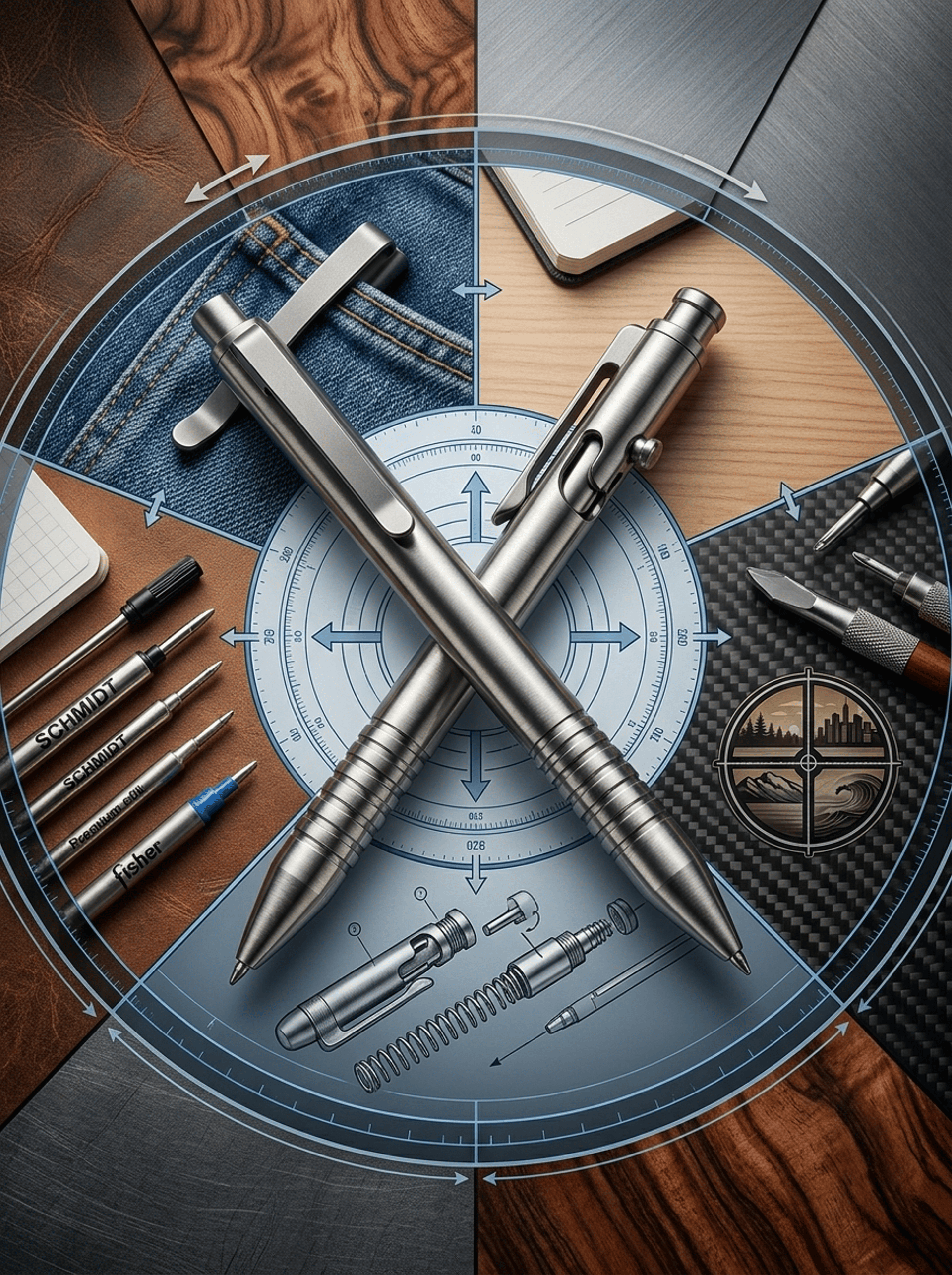
Bolt Action vs Click Pens: Which Mechanism Suits Your Everyday Carry?
Discover how the bolt action pen mechanism compares to click pens in durability, comfort, and pocket carry for your everyday carry needs.
EDC PENS
The EDCBuzz Editorial Team - Led by AJ “Buzz” Eichman
4/27/20268 min read
Choosing the right everyday carry pen isn’t quite the life-or-death decision some folks make it out to be, but it’s surprising how much the pen mechanism affects your daily experience. If you’re building a full setup, understanding how mechanisms fit into the broader world of EDC Pens helps connect everything. The humble bolt action pen and the classic click pen each have their loyal followings. After living with both for weeks on end, I can tell you they’re more than just different ways to extend a writing tip. Their mechanisms shape everything from durability to pocket feel, and yes, even how satisfying that little “click” is when you engage them.
In this article, we’ll dig into what makes bolt action and click pens tick, how they fare after real use, and who should consider which for their everyday carry. If you’re tired of carry gear that looks good but quickly gets annoying, this comparison might save you some painful trial and error.
Quick Verdict
Bolt action pens offer robust mechanical simplicity, making them usually more durable over time with a satisfying tactile engagement.
Click pens deliver quick, one-handed operation ideal for fast-paced or frequent jotting, though their more complex mechanism can be prone to wear if you pick the wrong model.
Both support standard refills generally, but verifying compatibility is key for long-term convenience.
Pocket clip quality varies across both types and significantly influences carry comfort and security.
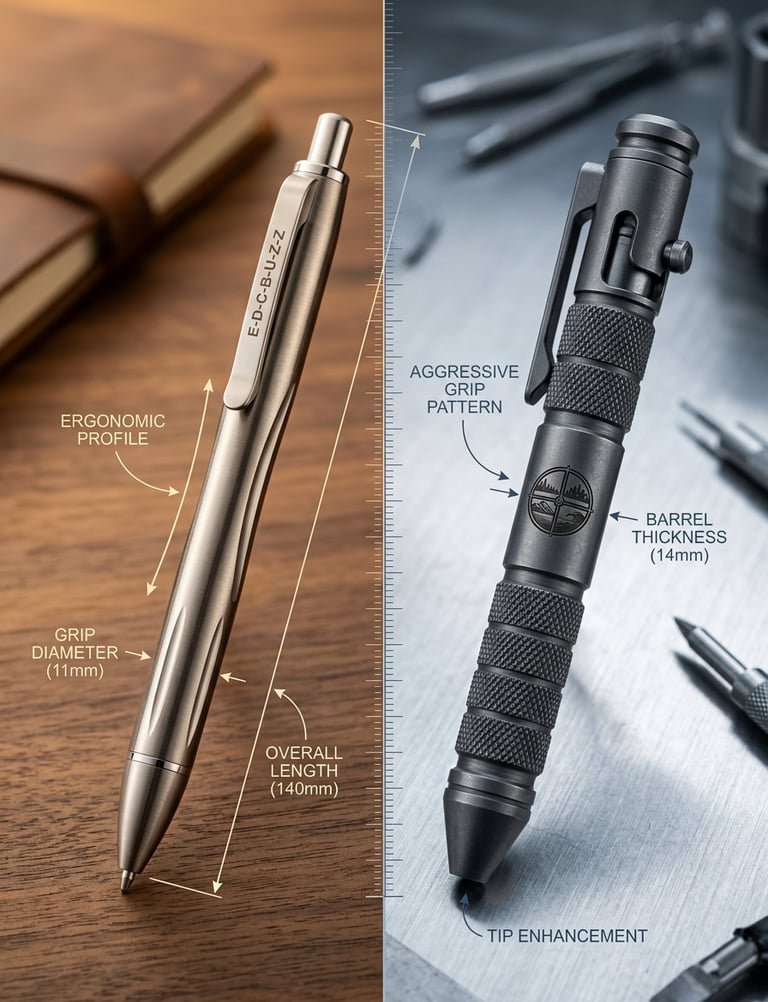
How Bolt Action Pens Work
If you’ve ever fiddled with an old-school rifle bolt (for the record, I have not), a bolt action pen mechanism gives a similar feel. The tip extends by sliding a small bolt along the pen’s barrel, which clicks and locks into place. You push it forward, hear that telltale satisfying click, and the tip stays put until you slide it back to retract.
If you’re looking specifically for reliable options built around this mechanism, Best Bolt Action Pens highlights some of the strongest performers.
The magic lies in its mechanical simplicity—there aren’t springs to fatigue or buttons to jam. The sliding bolt catches securely in a notch, so accidental retraction is rare. Over weeks of daily carry, you begin to appreciate how consistent and tactile this mechanism feels, even if it’s not as ridiculously fast as snapping a click pen tip out.
A slight downside develops after extended use: the bolt movement can get a touch sticky, especially if dust or pocket lint finds its way in. Still, a quick wipe with a dry cloth usually restores smooth operation. The audible feedback is also a charm for those who enjoy a little sense of ceremony when pulling out their pen — it’s like your pen saying, “Ready when you are.”
How Click Pens Work
The click pen, or retractable button pen, is the speed demon of everyday carry writing tools. A spring-loaded button at the top activates a cam system inside that pushes the tip out or retracts it with a satisfying pop. Ideal for busy note-takers or frequent signers, you can operate it all with one hand—no second hand needed to twist or slide anything.
If you’re trying to balance versatility across different styles and use cases, Best Multi-Purpose EDC Pens is a solid place to compare options beyond just mechanism type.
After living with click pens ranging from cheap disposables to sturdy metal builds, the mechanism’s reliability varies widely. High-quality click pens feel crisp and responsive day in and day out. Lower-end models begin to develop a spongy or inconsistent button feel after repeated clicks, which can be annoying in long meetings or classes.
One minor quirk to mention: carry habits matter. Without a reliable pocket clip or with a looser mechanism, you might experience the dreaded accidental “click” in your pocket. Nothing like having your pen tip pop out while sitting down to remind you to check your gear.
Durability and Build Quality Comparison
When it comes to durability, bolt action pens have the edge mostly because their mechanism stays mechanically simple. Fewer moving parts mean fewer issues down the road. The sliding bolt mechanism also tends to be more robust, mainly when constructed from quality metal alloys rather than plastic. This translates to reliable snaps and minimal play, even when pocketed alongside keys and coins.
Click pens, by contrast, use a spring and cam system that adds complexity. Spring fatigue or cam wear can lead to inconsistent operation or complete failure, especially in models made from lower-grade materials. That said, premium click pens built with firm tolerances and better materials can rival bolt action durability, but it’s a buyer beware scenario.
If you want to see how two premium builds stack up mechanically and materially, Ridge Bolt Action vs Fisher Space Measure offers a solid real-world comparison.
Writing Comfort and Ease of Use
Neither mechanism directly alters how the pen writes visually, but comfort and ease during operation significantly impact writing flow and attitude toward the pen. Bolt action pens often require two hands to extend or retract the tip, which slows things down but offers intentional control. The tactile feedback can even enhance the feeling of readiness before writing. On the downside, frequent operations can lead to grip fatigue if you’re contorting your fingers around the bolt in awkward ways.
Click pens shine for one-handed use. The button is usually near the top, allowing you to keep the pen in your writing grip while deploying it. This makes rapid jotting during meetings or quick note-taking far easier. The spring action requires a light but deliberate press, generally not enough to tire your thumb, even after many clicks.
One often overlooked factor is pocket comfort. Bolt action pens, with their sliding parts, tend to stay flush and less prone to accidental actuation in the pocket. Some click pens have a more prominent button that can dig into your leg or catch on fabric. If you’re the kind who carries pen everyday — not just for the show — this matters.
Refill Compatibility and Maintenance
Both pen types commonly accept standard refill cartridges — a solid plus for long-term convenience and cost-effectiveness. However, compatibility can’t be assumed. Bolt action pens, in particular, sometimes use proprietary or less common refills, which means you might need to stock up or track down specific brands. Click pens tend to be more standardized, especially the popular Parker-style refills.
If you’re still dialing in what actually matters in a daily carry pen, What Makes a Good EDC Pen is worth reviewing before locking in a choice.
Maintenance is generally straightforward for both. Bolt actions benefit from occasional cleaning of the bolt track to prevent grit buildup. Click pens might require replacement or occasional lubrication of the spring mechanism if they start to drag.
Pen Carry and Pocket Clip Design
The pocket clip might just be the unsung hero of everyday carry pens. A well-designed clip ensures your pen stays put and is easy to deploy without wearing on your pocket fabric. Both bolt action and click pens feature integrated clips, but quality varies widely.
With bolt action pens, clips are often minimalist but sturdy, blending well into metal barrels. They provide a balanced pocket feel, neither too tight nor too loose. Over time, this consistent fit means less fiddling and fewer lost pens.
Click pens show a broader range in clip design — some cheap models sport flimsy clips that bend or lose tension, causing the pen to shift or fall out. Higher-end models offer more substantial clips with good spring tension and smooth edges, reducing pocket wear.
Who Should Choose Bolt Action vs Click Pens
If your everyday carry involves rugged environments, mechanical simplicity, and an almost therapeutic tactile experience, bolt action is probably your friend. It’s for those who don’t mind a slightly slower deployment in exchange for durability and a bit of mechanical flair that holds up over months of use.
On the other hand, if speed and convenience take priority — think students locked in timed exams, office workers juggling multiple tasks, or anyone who needs the quick-draw capability — a quality click pen is a practical companion. Just make sure you pick a model with a sturdy mechanism and decent clip.
If you’re comparing premium-level builds in this category, James The Kent vs Ridge Bolt Action is another strong breakdown worth checking out.
Common Mistakes to Avoid When Choosing Between Bolt Action and Click Pens
Assuming all bolt action pens are more durable simply because of their mechanism without checking build materials. A plastic bolt action pen won’t outlast a well-made metal click pen.
Overlooking refill compatibility, which can limit your options and lead to frustration when your favorite cartridge doesn’t fit.
Selecting click pens with flimsy internal springs or cheaply made plastic parts that can wear fast and lead to inconsistent operation.
Ignoring how the pen mechanism affects comfort during extended writing; a pen that’s snappy to open but awkward to hold won’t get much use.
Neglecting the importance of a reliable pocket clip—whether bolt action or click, a weak clip can result in lost pens or suffer pocket damage.
Expecting all bolt action pens to operate silently; some models have loud clicks that might be distracting in quiet settings.
Common Questions About Bolt Action and Click Pens
What is the main difference between bolt action and click pens?
The primary difference is in how the pen tip extends and retracts: bolt action pens use a sliding bolt that locks in place manually, while click pens use a spring-loaded button mechanism for quick one-handed operation.
Which pen mechanism is better for heavy daily writing?
For heavy daily writing, click pens often win due to ease of use and quick deployment, but a high-quality bolt action pen can offer durability and comfort if you're fine with two-handed operation.
Are bolt action pens harder to operate than click pens?
Generally, bolt action pens require two hands and a sliding motion, making them slightly slower to deploy than the one-handed push of click pens, which are easier for quick use.
How do durability and repairability compare between bolt action and click pens?
Bolt action pens tend to be more durable due to fewer moving parts and simpler mechanics, making them easier to maintain or repair. Click pens have more components that can wear, especially springs, which might require replacement.
Do bolt action pens support standard refill cartridges?
Many bolt action pens accommodate standard refills, but some use proprietary ones, so it’s important to confirm compatibility before purchasing.
Which mechanism is better suited for outdoor or rugged use?
Bolt action pens are generally better for rugged environments due to their mechanical simplicity and fewer failure points, though high-quality click pens can also hold up well.
Can click pens cause accidental clicks in pocket carry?
Yes, particularly models with protruding buttons or loose mechanisms may click unexpectedly, which can be annoying or cause ink leakage.
What materials improve the lifespan of bolt action and click pen mechanisms?
Metal alloys and durable plastics enhance both types’ longevity, with metal bodies generally outperforming plastic in durability and pocket comfort.
Practical Conclusion
After spending extensive time carrying and writing with both bolt action and click pens, it’s clear neither mechanism is inherently “better.” Instead, your choice boils down to your daily habits and priorities. If you want a pen that feels like a tiny mechanical masterpiece with a satisfying slide and secure lock, bolt action is a strong pick — particularly if you carry in tougher conditions or value simplicity.
On the flip side, if speed, ease of use, and one-handed operation top your list, a quality click pen will keep up with your fast-paced days without complaint, provided you invest in solid construction and a dependable clip.
At the end of the day, the best everyday carry pen is the one you actually carry and enjoy using — not just something that looks cool on a desk. So take a moment to think about how you write, carry, and deploy your pen, then pick the mechanism that fits into your daily rhythm. And if all else fails, just remember: the pen that stays in your pocket won’t sign anything, no matter how fancy the mechanism.
Contact@TheBuzzHQ.com
© 2026 EDCBuzz. All rights reserved.
EDCBuzz
Master everyday carry systems with clarity and precision. Built for real environments and practical use.
For educational purposes only.
General Inquiries: