
What Makes a Good EDC Knife?
Discover what makes a good EDC knife with key features like blade steel, handle comfort, and carry options to fit your daily utility needs.
EDC KNIVES
The EDCBuzz Editorial Team - Led by AJ “Buzz” Eichman
5/8/20268 min read
Everyday carry (EDC) knives have a special place in the pockets, bags, and minds of folks who value utility and dependability. They’re not flashy showpieces or complicated gadgets — they are practical tools, quietly ready for all those small but important tasks that the day throws at you. Whether you’re slicing open a package, prepping a snack on the go, or tackling that stubborn zip tie at work, a good EDC knife makes life easier without getting in the way.
If you’ve spent any time exploring EDC Knives, you’ve probably noticed pretty quickly that some knives simply disappear into your daily routine better than others.
But what exactly makes a knife ""good"" enough to earn that daily spot next to your keys or wallet? It’s more than just a sharp blade. After living with a handful of options for several weeks, you start noticing the nuances that really count. Comfort, ease of carry, durability, and simplicity are just a few of the qualities that separate an EDC knife you tolerate from one you rely on.
If you’ve ever wondered what to look for in an everyday carry knife beyond the initial flash and hype, this guide walks you through the features and considerations that can make a significant difference once the novelty wears off and you’re down to everyday use.
Quick Verdict
• A good EDC knife balances sharp, durable blade steel with comfortable, ergonomic handles that prevent grip fatigue.
• A reliable locking mechanism and smooth deployment method enhance safety and everyday usability.
• Size and weight should keep the knife handy, never a burden — it needs to quietly live alongside your pocket contents, not dominate them.
• Maintenance ease, from sharpening to corrosion resistance, ensures your pocket companion stays sharp and dependable over the long haul.
What is an EDC Knife and Why It Matters
An EDC knife is exactly what it sounds like: a cutting tool you can carry every day to handle the small, practical tasks that pop up regularly. Unlike specialized outdoor or chef knives, an EDC knife thrives in the mundane — opening letters, trimming threads, or quickly slicing fruit. That’s why a good one needs to strike a careful balance between readiness and convenience.
If you’re newer to the space, guides like What Is EDC and EDC for Beginners help explain why everyday carry gear becomes part of people’s daily routines so quickly.
It’s easy to overlook just how often you might pull out your knife through the day until you actually carry one regularly. And practicality matters here. After several weeks of pocket time, you’ll notice when a blade just doesn’t do what you need, when the handle pinches your fingers, or when the locking system feels sketchy even if it looked fine at first. So the definition of a good EDC knife extends beyond sharpness: it’s about being comfortable, reliable, secure, and unobtrusive.
Key Features of a Good EDC Knife
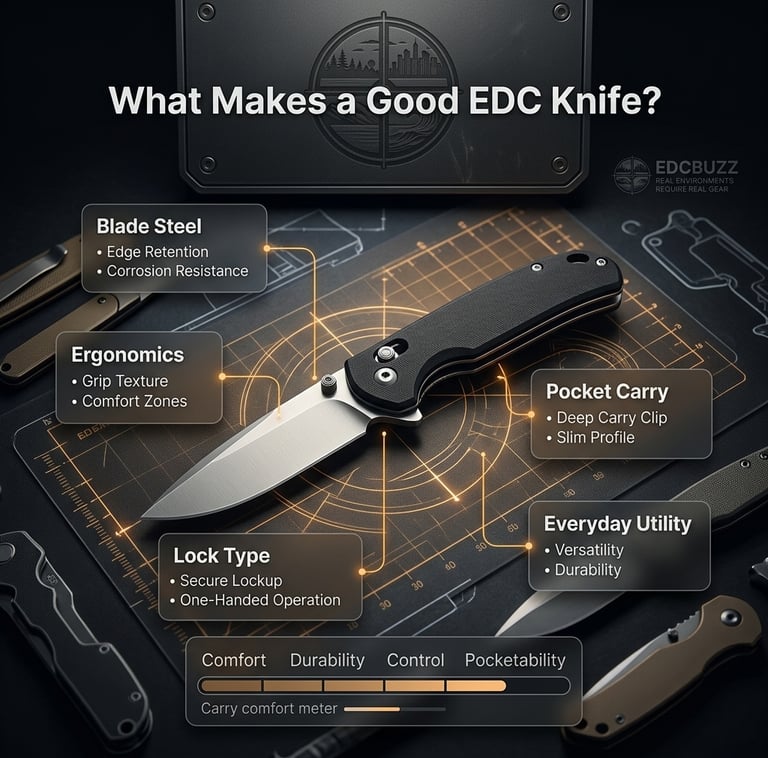
The best EDC knives have a combination of features that add up to smooth, confident daily use.
Blade Steel and Sharpness
Blade steel is more than just a fancy name on marketing sheets; it’s the backbone of your knife’s usefulness. Among common choices, steels like AUS-8, 154CM, and S30V hit the sweet spot for everyday use. These steels keep their edge well enough that you’re not sharpening every morning and are resistant enough to corrosion so you don’t have to baby the blade.
If you want a deeper breakdown of edge retention, toughness, and corrosion resistance, the EDC Knife Steel Guide explains how different steels actually behave during long-term use.
I’ve carried knives with both S30V and AUS-8 steels side by side. The S30V holds the edge longer but demands a bit more effort to sharpen when you finally get around to it. Meanwhile, AUS-8 is more forgiving to tune up but requires touch-ups more frequently. For most people, it boils down to personal preference on maintenance commitment versus edge retention.
Blade Shape and Size
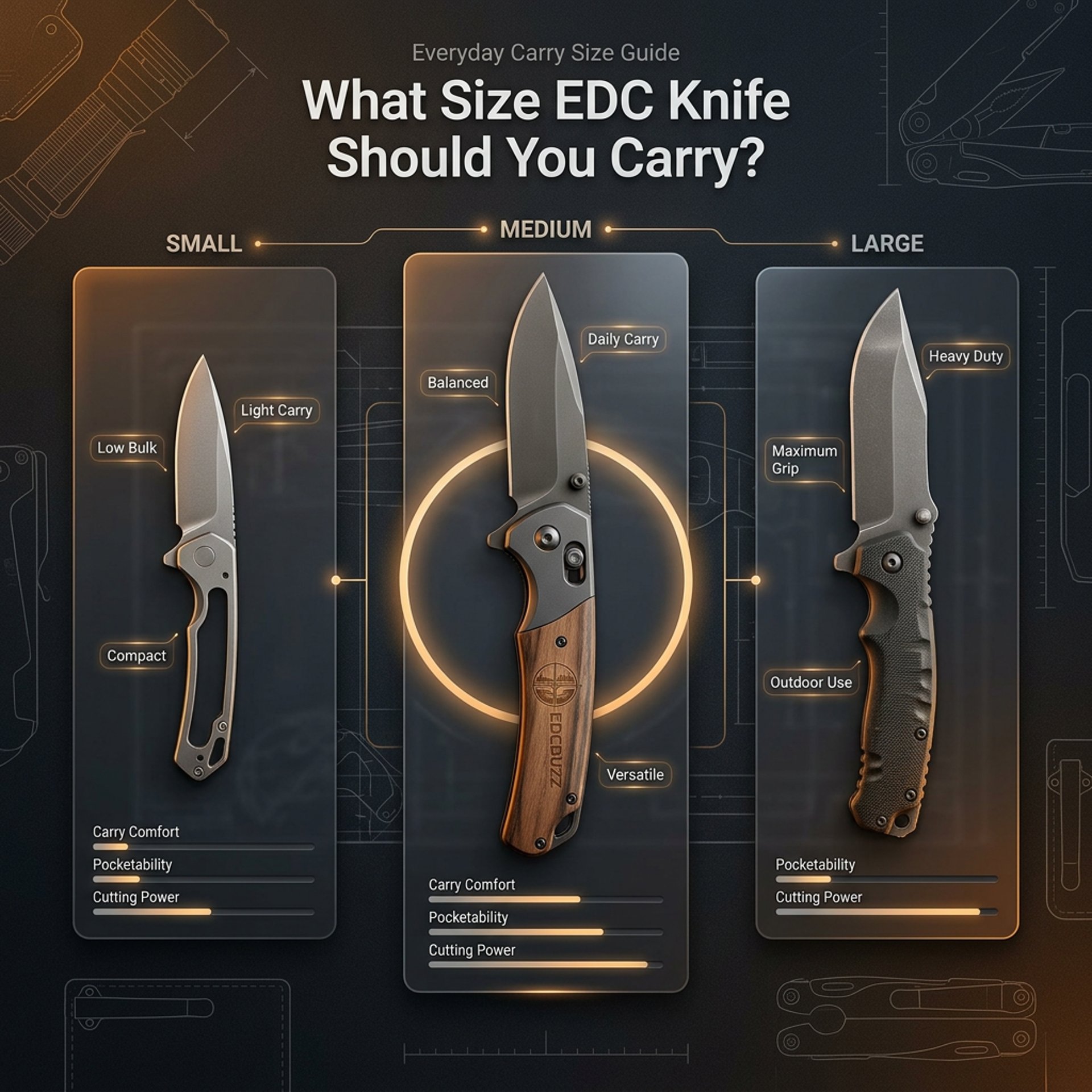
The ideal blade shape hinges on your typical tasks. Drop point blades are versatile and robust, suited for everything from package opening to outdoor prep. Clip points offer more precision, which can be great for delicate tasks, but tend to be a little less durable at the tip. Tanto blades are very tough but less adaptable for everyday cutting and slicing.
If you’re still learning the practical differences between shapes, Knife Blade Types Explained breaks down where each blade style actually shines.
Blade length is another tightrope walk. Too short, and you’re reaching for a bigger tool when you need to cut through thicker materials. Too long, and the knife becomes unwieldy and uncomfortable in the pocket. Around 3 to 3.5 inches usually hits the sweet spot for utility and ease of carry without attracting unwanted attention.
Handle Design and Comfort
This is where long-term use really takes center stage. A handle that feels great holding it once or twice might start to irritate or cramp your hand after 10 or 15 minutes of repeated cutting. Ergonomics matter. Materials like G10, aluminum, titanium, and high-quality polymers each bring something different to the table in terms of grip, durability, and weight.
One detail that only shows up over time is how friendly the handle is to your skin — does it cause blisters or slippage when your hands are sweaty? Is the texture aggressive enough for confidence but not so rough it wears through your pocket lining? It’s worth testing different materials and shapes for grip comfort before committing.
You can really feel how different ergonomics change the carry experience in comparisons like CIVIVI Elementum vs CJRB Pyrite where both knives approach everyday usability a little differently.
Lock Mechanisms and Safety Considerations
A locking mechanism isn’t just a safety feature; it’s the gatekeeper of your whole experience. The last thing you want is a blade that wobbles or closes unexpectedly when you’re relying on it. Liner locks and frame locks are the mainstay here — both provide strong, secure locks, but each has its quirks. Frame locks tend to be robust and integral to the knife body, while liner locks are often lighter and easier to manipulate but may require occasional adjustment.
If you want a deeper understanding of how different systems behave during use, Knife Lock Types Explained covers the strengths and weaknesses of the most common lock styles.
Smoothness of deployment counts too. Whether it’s a manual thumb stud or flipper, the action should be consistent and pleasant, not a stiff hassle you dread using. A knife that deploys easily with one hand typically makes the difference between “Oh well, I’ll use scissors” and “That knife just saved me time.”
Size, Weight, and Carry Options
A good EDC knife knows its place in your daily routine. After several days of carry, the weight becomes noticeable — not a dealbreaker, but not something you forget about either. The clip placement should allow for comfortable carry and quick access without awkward shifting or discomfort when you move.
You want a knife that easily slips into your pocket without creating a lump you notice every time you sit down. Pocket clips that are well designed and positioned can make or break the carry experience. Left or right-side carry, tip-up or tip-down, deep carry or not — these choices matter more when you’re pocketing the knife for hours every day.
Knives like the ones featured in Benchmade Bugout vs Spyderco Para 3 show how much weight and carry profile can completely change long-term pocket comfort.
Common Mistakes When Choosing an EDC Knife
There’s a surprising number of ways to trip yourself up when picking an EDC knife, beyond just choosing something too flashy or heavy. A common one is going for an overly large or heavy blade under the assumption that bigger means better. In reality, that bulk often leads to discomfort and lack of use — the knife spends more time in your drawer than your pocket.
Another pitfall is ignoring steel quality or maintenance needs. A knife made from low-quality steel might look nice but dulls quickly and rusts if you don’t spend time on upkeep. It might feel like overkill to think about sharpening intervals when you’re just starting out, but it’s a factor that emerges with use.
Skipping over handle ergonomics is yet another trap. A beautiful handle with poor grip or an uncomfortable shape makes your hand ache by day’s end and risks slips—something you don’t want with any sharp implement. Additionally, neglecting lock strength or deployment method can lead to frustration or safety issues down the line.
Many first-time buyers also jump straight into expensive models before spending time with more affordable options like the ones in Best EDC Knives Under $50 or Best EDC Knives for Beginners.
Finally, don’t let brand glamour overshadow practical details. A well-known name isn’t everything; it’s how the knife performs in your hand, pocket, and daily tasks that truly counts.
Maintenance Tips for Longevity and Performance
A good EDC knife is a reliable partner only if you keep it in shape. Regular sharpening is the straightforward part — most users find that every few weeks or even months is enough depending on use, with more frequent touch-ups if you’re cutting rough materials daily.
Cleaning the blade and handle occasionally to remove dirt, oils, and moisture prevents corrosion, especially on steels that aren’t stainless. Lubricating the pivot area after cleaning helps maintain smooth opening action and extends lock life. Handling your knife with clean hands can also help reduce grime buildup.
If you pick up on any wobble in the blade or lock, addressing it early with basic adjustments or professional service keeps the tool safe. It may sound like work, but a little TLC results in a knife that’s willing to show up and perform every day.
Frequently Asked Questions About EDC Knives
What blade length is ideal for an everyday carry knife?
Generally, a blade length between 3 and 3.5 inches is a good starting point for versatility and portability. It’s long enough for most common tasks without adding bulk that hampers carry comfort.
Which blade steel offers the best balance for EDC use?
Steels like AUS-8, 154CM, and S30V strike a nice mix of edge retention, corrosion resistance, and ease of sharpening suitable for daily carry knives.
What handle materials are best for grip and comfort?
Materials like G10, titanium, aluminum, and quality polymers are popular. The best choice depends on grip texture preference, weight tolerance, and hand ergonomics.
How important is the locking mechanism on an EDC knife?
Very important. A strong, reliable lock prevents accidents and provides confidence during use. Liner and frame locks are common for good reason.
Can I carry an EDC knife legally everywhere?
Knife laws vary widely by location, especially regarding blade length and deployment method. Always check local regulations before carrying.
How often should I sharpen my EDC knife?
Frequency depends on use. Light daily tasks may require sharpening only every few months, while heavier use or tougher materials might call for monthly maintenance.
What are common mistakes to avoid when choosing an EDC knife?
Avoid overly large or heavy knives, poor quality steel, uncomfortable handles, weak locks, and prioritizing looks over real-world function.
How do I maintain my EDC knife for long-term use?
Keep it clean and dry, sharpen regularly, lubricate pivot points, and check lock and blade tightness. Proper care extends the tool’s life substantially.
Conclusion
A good EDC knife is a bit like a quiet sidekick you barely notice but would definitely miss if it wasn’t there. It’s not the flashy hero, but the reliable utility player. After weeks of carrying and using a knife in real-world daily tasks, small details become glaringly obvious: the weight after hours of pocket time, whether the handle blistered your fingers, if the lock inspired trust or suspicion, and how easily the blade deployed every time you needed it.
Choosing the right everyday carry knife means balancing sharp, durable steel with a handle that fits your hand and a size that fits your life. Overlooking the little things — from locking mechanisms to pocket clip placement — can turn your handy tool into an afterthought you’d rather forget. But when the right one settles into daily use, it becomes a silent, dependable partner in the small victories of everyday life.
If you’re still narrowing down your options, pages like Best Premium EDC Knives and Best EDC Knives can help compare different carry styles and price points more directly.
And really, isn’t that the whole point of a good EDC knife? It’s there when you need it, and away when you don’t — except when you’re sitting down, then you might just remember it nonetheless.
Contact@TheBuzzHQ.com
© 2026 EDCBuzz. All rights reserved.
EDCBuzz
Master everyday carry systems with clarity and precision. Built for real environments and practical use.
For educational purposes only.
General Inquiries: