
Knife Blade Types Explained: A Comprehensive Guide
Explore essential knife blade types and their designs to find the best blade shape for EDC, balancing control, cutting efficiency, and maintenance.
EDC KNIVES
The EDCBuzz Editorial Team - Led by AJ “Buzz” Eichman
3/28/20266 min read
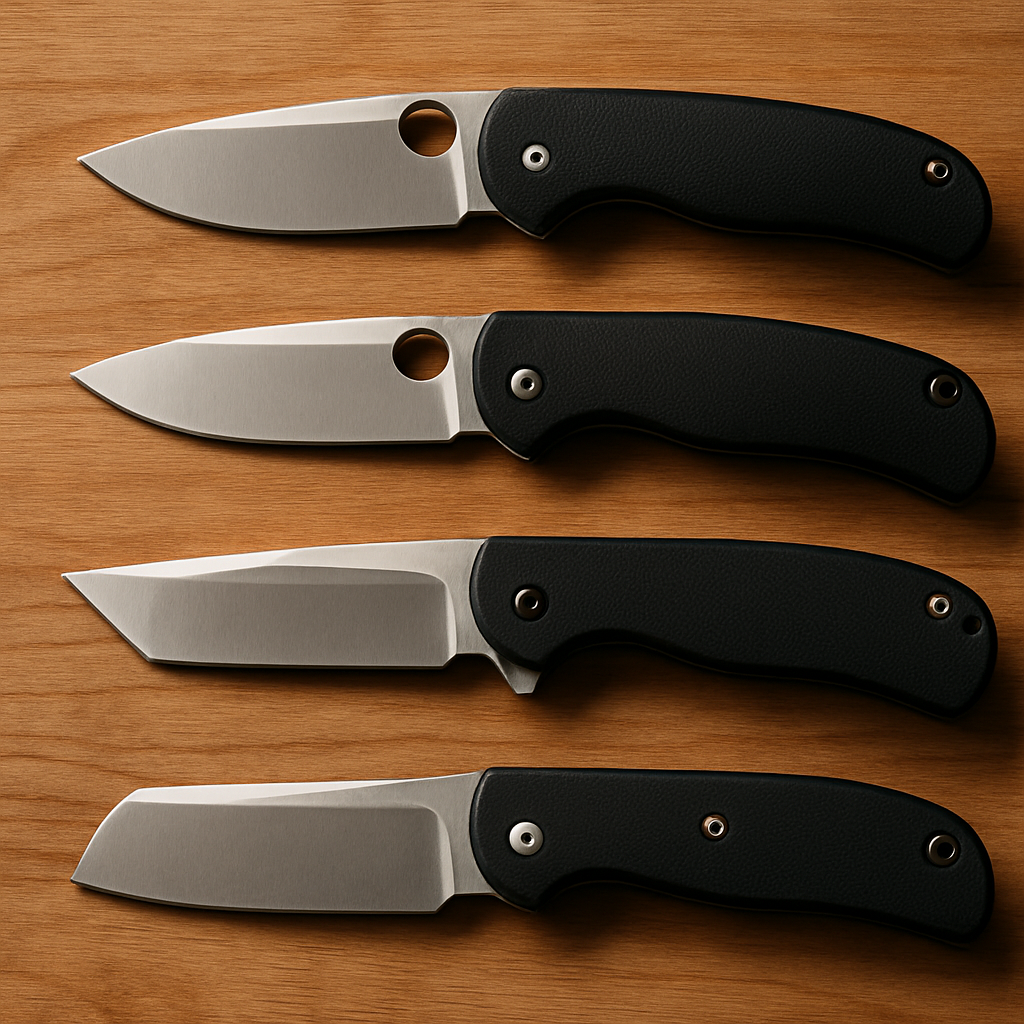
Understanding the interplay between blade shapes and edge geometries is fundamental to grasping how knives perform in everyday carry (EDC) scenarios. Knife blades are not just arbitrary designs; each curve, point, and bevel serves a purpose, finely tuned to balance control, cutting efficiency, strength, and maintenance. As we break down knife blade types, we’ll uncover why certain shapes excel in specific tasks and how their construction influences durability and ease of use. This technical overview aims to help you read beyond a knife’s surface and understand what each blade offers in practical terms, so your next selection aligns with your daily cutting needs.
Quick Verdict
Drop point blades provide a deliberate balance between control and strength, making them versatile for the wide range of tasks typical in EDC use.
Clip point blades feature a sharper tip geared towards piercing and precision work, though this comes at the expense of some tip robustness.
Serrated edges excel at slicing through fibrous or tougher materials but require more specialized maintenance.
Sheepsfoot blades sacrifice piercing capability for a safer, more controlled slicing experience.
Understanding Knife Blade Shapes and Their Purposes
At its core, a knife’s shape influences how it interacts with the material being cut. The profile—meaning the outline or silhouette of the blade—affects leverage, penetration, and control. In practical terms, this means a blade designed with a particular shape will excel in some cutting scenarios while being less effective in others.
If you’re looking at this from a broader perspective, it helps to understand how these designs fit into the larger category of EDC knives and how blade shape becomes just one part of the overall carry decision.
Common Blade Shapes Explained: Drop Point, Clip Point, Tanto, Sheepsfoot, and More
Drop Point
The drop point blade is characterized by a convex curve from the spine down to the tip. This lowers the profile of the tip relative to the spine, increasing the belly or curved cutting edge area. The advantage here is twofold: a gradual taper improves tip strength while maintaining slicing performance, and the broad belly allows smooth, controlled cuts.
In everyday use, this balance is why drop points consistently show up in many of the best EDC knives available today.
Clip Point
Distinguished by a concave “clip” taken out of the spine leading to a sharp, narrow tip, the clip point blade enhances precision piercing and detailed cutting. The acute tip is useful for tasks where puncturing or making fine incisions matters. However, the sharper and narrower tip reduces overall strength, making clip points less suited for heavy-duty applications.
Tanto
Tanto blades focus on a reinforced tip design with a straight edge angle meeting another edge at a high-angled point. This creates a durable tip optimized for piercing harder materials, though it sacrifices slicing efficiency due to reduced belly curvature. For everyday carry, the design can feel specialized unless your tasks demand that extra tip strength.
Sheepsfoot
Sheepsfoot blades have a straight cutting edge that curves up to meet a blunt spine tip, effectively removing any penetrating point. This design provides excellent control for slicing tasks where accidental puncture is a concern, such as opening packages. It trades versatility for safety and control, which can be valuable depending on your daily tasks.
Blade Edge Types: Plain, Serrated, and Combination Edges
The edge geometry of a blade directly influences how it cuts and how it must be maintained. Edge types generally fall into plain, serrated, or combination categories, each suited to different tasks.
Plain Edges
Plain edges are smoothly sharpened to a continuous bevel, allowing clean and controlled cuts across a wide range of materials. They are easy to maintain with standard sharpening tools and offer the most versatility for general everyday tasks.
Serrated Edges
Serrated edges use saw-like teeth to improve cutting performance on fibrous materials like rope or cardboard. They excel where a plain edge may struggle to “bite,” but they are more difficult to sharpen and less suitable for precise cuts.
Combination Edges
Combination edges merge both plain and serrated sections, offering flexibility for users who encounter a variety of cutting tasks. While useful, they require a more deliberate approach to maintenance and usage.
Blade Geometry and Grind Types: How They Affect Performance
Beyond shape and edge style, blade performance is heavily influenced by grind type—the way the blade tapers toward the edge. Flat grinds reduce thickness for better slicing, hollow grinds increase sharpness but reduce durability, and convex grinds improve toughness at the cost of slightly increased cutting resistance.
These differences often become noticeable only after extended use, especially when comparing how blades perform across different materials and tasks.
Choosing the Best Blade Shape for Your Everyday Carry Needs
Aligning blade shape with your daily use is key to getting the most out of an EDC knife. If your tasks are varied, a drop point blade offers a reliable balance. For more detailed or precise cuts, a clip point may feel more natural, while sheepsfoot blades excel in controlled slicing situations.
If you’re still narrowing down your options, comparing different types of EDC knives alongside blade shapes can help clarify what actually fits your daily routine.
Materials and Construction: Impact on Durability and Maintenance
Blade Materials
Steel choice plays a major role in performance. Stainless steels such as 154CM or S30V balance corrosion resistance and edge retention, making them common in everyday carry knives. Carbon steels can offer better sharpness and edge retention but require more attention to prevent corrosion.
If you want to understand how these differences impact real-world use, a deeper look at an EDC knife steel guide helps connect the material choices to long-term performance.
Handle Materials
Handle materials affect grip, weight, and durability. Metals like aluminum or titanium provide strength and lightness, while materials like G10 offer better grip and comfort in varied conditions. Over time, these differences become more noticeable than they first appear.
Maintaining Different Blade Types: Sharpening and Care Tips
Maintenance varies depending on blade and edge type. Plain edges are straightforward to sharpen using common tools, while serrated edges require specialized rods to maintain each tooth. Combination edges require attention to both sections.
Routine cleaning and occasional lubrication help preserve both performance and longevity, especially with frequent use.
Common Misconceptions About Knife Blade Types
One frequent mistake is choosing a blade based purely on appearance rather than function. This often leads to frustration when the knife doesn’t perform as expected during daily tasks.
Another misconception is assuming serrated edges are always better. While effective on fibrous materials, they are less useful for precise cutting and more difficult to maintain.
Ignoring steel composition and maintenance needs can also lead to poor long-term performance, especially if corrosion or edge retention becomes an issue.
FAQ
What is the best blade shape for everyday carry?
The best blade shape for EDC typically balances versatility, strength, and control. Drop point blades fit this role well because they handle a wide range of everyday tasks reliably.
How do blade geometries affect cutting performance?
Blade geometry determines how easily a blade slices, how durable the edge is, and how it holds up over time. Thinner edges cut more efficiently, while thicker ones provide more strength.
What are the advantages of serrated vs plain edges?
Serrated edges perform well on fibrous materials, while plain edges provide cleaner, more precise cuts and are easier to maintain. The choice depends on your typical use.
How do I maintain different blade edge types?
Plain edges can be sharpened with standard tools, while serrated edges require specialized rods. Combination edges require both methods depending on the section being maintained.
Which blade materials are best for EDC knives?
Stainless steels with balanced corrosion resistance and edge retention are often preferred for EDC. Carbon steels can perform well but require more maintenance.
Are there blade shapes better suited for outdoor vs urban use?
Yes. Drop point and sheepsfoot blades work well for general urban use, while clip point and tanto blades may suit more demanding outdoor tasks.
What is blade grind and how does it affect use?
Blade grind refers to how the blade tapers to the edge. It affects cutting efficiency, durability, and sharpening difficulty.
Can blade shape impact safety during use?
Yes. Shapes like sheepsfoot reduce the risk of accidental puncture, while sharper-tipped blades require more control during use.
Practical Conclusion
Understanding knife blade types involves looking beyond surface design to see how shape, edge, grind, and material all work together. Each decision impacts how the knife performs, how long it holds an edge, and how comfortable it is to use daily.
If you want to see how these differences play out in real-world comparisons, it can be helpful to look at side-by-side breakdowns like Zero Tolerance 0357BW vs Kershaw Bel Air.
Choosing the right blade isn’t about picking what looks best—it’s about selecting what works consistently for your everyday tasks.
Contact@TheBuzzHQ.com
© 2026 EDCBuzz. All rights reserved.
EDCBuzz
Master everyday carry systems with clarity and precision. Built for real environments and practical use.
For educational purposes only.
General Inquiries: