
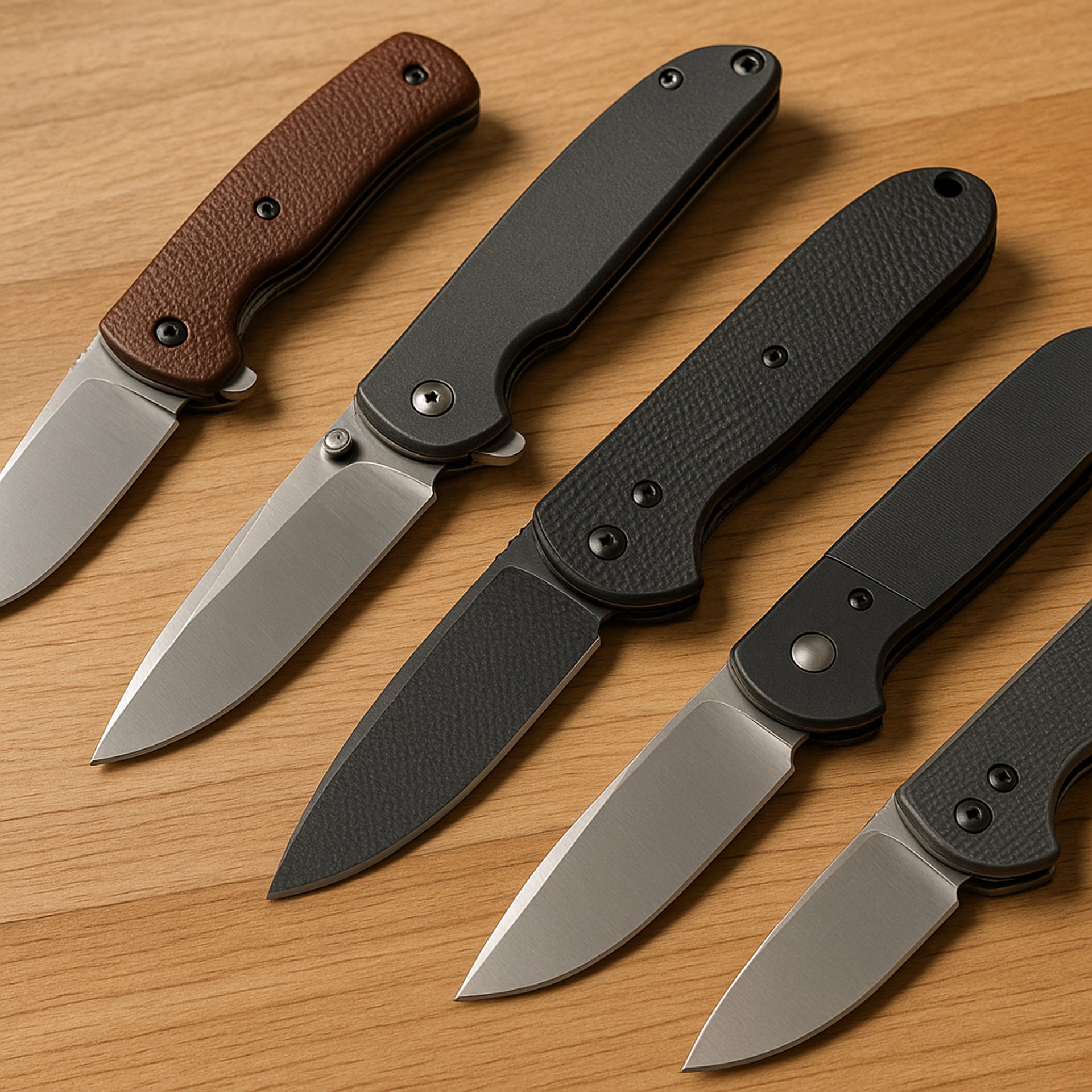
What Size EDC Knife Should You Carry?
Discover how to choose the right EDC knife size based on comfort, usability, and daily tasks for the perfect everyday carry tool.
EDC KNIVES
The EDCBuzz Editorial Team - Led by AJ “Buzz” Eichman
5/8/202610 min read
Choosing the right size for an everyday carry knife is a little like picking the right pair of shoes: it’s easy to get distracted by style or flashy features, but the real test comes from day-to-day comfort and practicality.
After carrying knives of all sizes through daily tasks, both mundane and unexpected, I’ve learned that size isn’t just a number—it’s a balance of usability, pocket comfort, and task suitability.
Choosing the best size EDC knife means figuring out how that blade feels after hours spent in your pocket or hand, not just how sharp it looks new out of the box.
If you're still exploring the broader world of EDC Knives, understanding size is one of the biggest factors in finding a knife you’ll actually carry every day.
Let’s break down the practical experience of carrying small, medium, and large knives, and figure out what size fits your everyday life best.
Quick Verdict
Small EDC knives keep things discreet and lightweight but can struggle when tougher cutting jobs sneak up on you.
Medium EDC knives cover most daily tasks comfortably, striking a healthy balance between pocket presence and functionality.
Large EDC knives excel at heavy-duty use but can feel like a bulky passenger on your hip, especially after hours of carry.
Comfort and legality matter as much as blade length—consider your typical tasks and local blade laws before settling on size.
Understanding EDC Knife Sizes: Small, Medium, and Large
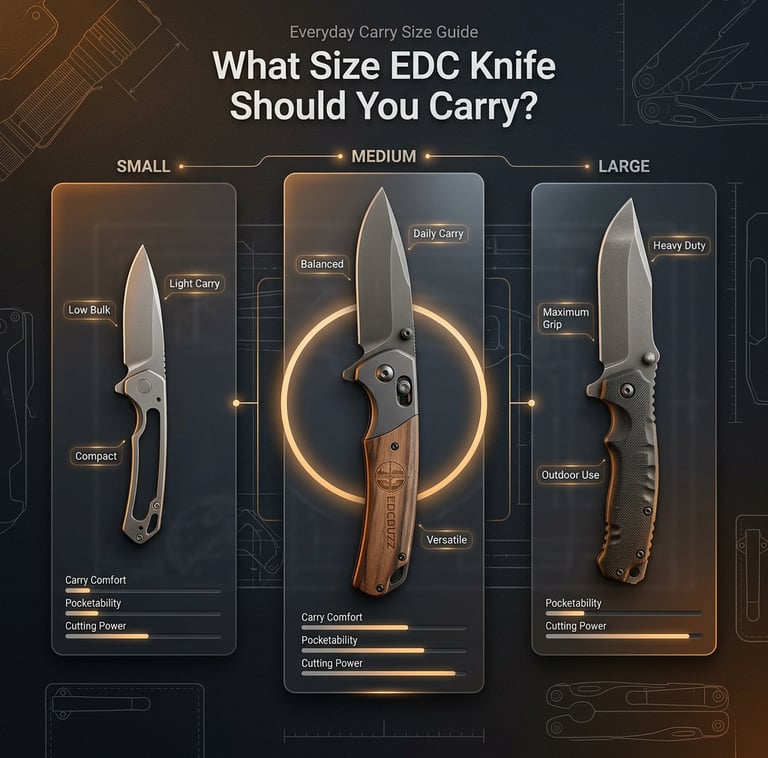
EDC knives generally fall into three categories based on blade length: small (under 3 inches), medium (about 3 to 3.5 inches), and large (over 3.5 inches).
Each class brings its own trade-offs when it comes to ease of carry, task versatility, and comfort over extended use.
If you’re still learning the basics, understanding the different Types of EDC Knives helps explain why some sizes naturally work better for certain carry styles.
After a couple of weeks carrying each size class, several differences become clear beyond the initial “this looks right” feeling.
Small knives tend to be the invisible companions of the EDC world. Their lightweight, slim profiles mean you usually forget they’re there until you need them for light cutting — like slicing open a food package or trimming some thread.
You get great pocket security, little bulk, and good legality in many areas. But reach for a smaller knife to slice through tougher stuff, and you might find your patience and leverage tested.
These are the quiet marathon runners of the knife world, low-key and reliable, but suited more to finesse than raw power.
Medium knives, hovering in that 3 to 3.5-inch sweet spot, have a way of fitting in naturally after a few days.
They don’t announce themselves loudly in your pocket, but they carry just enough heft and blade length to get through typical daily tasks without feeling cramped or under-equipped.
From light woodworking to opening Amazon boxes, this size tends to handle everything with the kind of “good enough” versatility that earns long-term trust.
Plus, the grip size usually hits a comfortable stride — neither too fiddly nor too bulky — which matters when you find yourself using the knife repeatedly through the day.
Large knives stand out immediately, both physically and in terms of capability.
Once the novelty wears off, you start to notice the weight, especially if your day’s workload stretches your arm or involves climbing stairs.
They’re ideal tools when your day demands cutting thicker ropes, field dressings for fishing, or rougher outdoor tasks.
That said, the bulk means these knives are less discreet and can become a pocket burden, especially if you’re not carrying a jacket or bag to offset the weight.
After hours on your person, they remind you they’re there — sometimes with a slight pinch or pressure point you wouldn’t expect.
That’s not a dealbreaker unless you expect your knife to stay unnoticed all day.
Advantages and Disadvantages of Small EDC Knives
Small EDC knives shine for users who prize stealth and convenience above raw cutting power.
Their blade length under three inches means they can slide into pockets, coin pouches, or even on keychains with minimal fuss.
If you spend your day dealing with paper, opening packages, or making minor food prep cuts, a small knife can stay out of the way while still being handy.
Many compact knives also lean heavily toward modern lightweight carry designs, similar to the knives discussed in Benchmade Bugout vs Spyderco Para 3.
However, I noticed that after tackling anything a bit denser — cardboard layers, plastic wraps, or thin cordage — your hand starts looking for more purchase and power.
Small blades often mean smaller handles, which can contribute to grip fatigue on repetitive or tougher cuts.
If you find your cutting needs occasionally stretching beyond simple tasks, this size might leave you wishing for just a bit more blade and handle to get leverage.
On the plus side, smaller knives nearly disappear in the pocket or on a clip, which means a comfort level that’s easy to ignore — like carrying a particularly well-behaved pet.
And if you have local blade length restrictions, small knives often fall comfortably within legal limits, keeping the carry hassle-free.
Why Medium-Sized EDC Knives are the Most Versatile Option
After living with a handful of medium-sized knives, what stands out is how effortlessly they slot into everyday life.
The blade length around 3 to 3.5 inches is a sweet spot — long enough to handle an impressive variety of tasks without feeling over the top.
Many of the knives featured in Best EDC Knives and Best EDC Knives Under $100 land directly in this size category because it balances usability and carry comfort so well.
The handles tend to hit an ergonomic balance that reduces grip fatigue over long sessions.
You don’t need to adjust your hold constantly or wrestle with awkward angles to finish a cut.
This size also lets you use more leverage, helping with rope, tougher food prep, and even basic DIY tasks.
If you pick a medium knife with weight-conscious materials like G10 scales or titanium liners, you’ll forget it’s there after a half day, but still appreciate the extra cut power if you need it.
In my experience, medium knives settle into that "just right" category, especially if you want one tool for a full range of tasks — from light work to the occasional heavier job.
They also tend to strike a reasonable balance for pocket carry.
Not so small as to feel toy-like, not so large as to dominate your pocket space, medium-sized knives usually feel like a natural fit for daily use.
Large EDC Knives: When Size Matters
Large knives can really earn their keep when the day’s work calls for something tougher than just opening boxes or slicing fruit.
Blade lengths over 3.5 inches inevitably provide extra cutting edge and leverage, which can make quick work of thick rope, branches, or preparing outdoor gear.
Heavier-duty carry styles like the ones featured in Cold Steel AD-15 vs Spyderco Para Military 2 are good examples of where larger knives start making practical sense.
But if you’re not regularly doing those kinds of tasks, that bulk can quickly become a nuisance.
I found that large knives become very noticeable in pants pockets, especially with thinner or lighter clothing.
Over hours, what started as a manageable presence can become a persistent reminder — the kind that invites you to think about a different knife or one of those fancy little fanny packs people always joke about.
Most large knives require a deeper pocket or jacket carry for comfort, which adds an extra decision point to your carry routine.
They’re also heavier, which means your pants might remind you they’re carrying more than just your phone and wallet.
In a way, large knives are like that overenthusiastic coworker — fantastic when you really need extra help, but sometimes a little much when the day is slow.
Legal and Practical Considerations for EDC Knife Size
One aspect that surprises newer knife carriers is the variety of legal limits on blade length by region.
Some places cap blade lengths well below 3.5 inches for everyday carry, and not paying attention can lead to awkward questions or worse.
Before settling on the best size EDC knife, take a moment to review local laws.
Sometimes the perfect carry knife in terms of comfort and usability can become a legal headache if its blade crosses the line.
Beyond legal limits, practical day-to-day considerations matter just as much.
Blade material and handle construction affect the overall weight and durability of the knife, which in turn influences how comfortable it is hour after hour.
If you want a deeper breakdown of how steel impacts durability, edge retention, and maintenance, the EDC Knife Steel Guide explains what actually matters in daily carry.
A bulky titanium-handled large knife might feel lighter than an aluminum medium knife with thicker scales, showing that size alone is just one piece of the puzzle.
Pocket clip design, whether tip-up or tip-down, and the ease of deployment also play roles in how the knife integrates into your daily carry.
A medium or even large knife with a poorly designed clip can annoy you far more than a smaller knife that sits perfectly invisible.
How to Determine the Best Size for Your Everyday Needs
To find the best size EDC knife for your daily life, start by thinking about your typical tasks.
Is your day mostly office-based with occasional package openings?
Small knives might be natural fits.
Do you work in construction, outdoor work, or frequently find yourself needing to cut heavier materials?
Medium or large sizes usually serve better.
For newer users, many knives in Best EDC Knives for Beginners tend to stay in the compact-to-medium range because they’re easier to carry and less intimidating to use daily.
Also, consider if you prioritize pocket comfort over blade size.
Weight and bulk add up, especially if you carry other gear like flashlights, pens, or multi-tools.
A knife that’s a joy to carry means you’ll use it more often.
I’ve seen great knives relegated to drawer duty simply because they weren’t comfortable enough for daily pocket carry.
Don’t forget to factor in legal limits and how you dress—jeans and cargo pants tolerate larger knives better than slim dress pants.
Try carrying your chosen size around the house before making it your permanent companion.
It might feel fine walking to the car but annoying by the time you sit down at your desk.
Tips for Comfortable Pocket Carry of Your EDC Knife
Comfortable carry is often overlooked until you’ve had a knife digging into your thigh after half a day.
When choosing your EDC knife size, consider the thickness of the handle and how the clip positions the knife in your pocket.
Thinner handles and well-designed clips that tuck the knife deeply reduce pocket bulk and pressure points.
Deployment style and lock design also affect carry experience more than many people expect.
The differences covered in Knife Lock Types Explained become especially noticeable once you start carrying a knife every day.
Materials matter too—knives with metal handles might weigh more but sometimes balance well, while G10 or carbon fiber handles often feel lighter and less obtrusive.
I like to slip my knife into the same pocket as a slim wallet or phone, and a thinner profile helps avoid the “tablet in your pocket” effect.
It’s worth testing deployment and clip tension as well.
A clip too stiff makes pocketing a chore; too loose, and you risk losing your favorite tool.
Often, medium knives provide the best combo of blade size and carry comfort, but with the right choices, small and large knives can both work well in pockets—just expect to adapt your clothing or carry mindset a bit.
Common Mistakes to Avoid When Choosing an EDC Knife Size
The biggest trap is picking a knife that’s too large and then regretting its bulk after a few days.
Some users buy big blades thinking bigger means better, only to leave the knife at home because carrying it all day gets old fast.
Conversely, choosing a knife too small can mean struggling with basic cutting tasks that need a bit more edge.
It’s like bringing a butter knife to a steak dinner—not quite up to the job.
Ignoring local blade length laws is another common misstep.
Even if you love a flashy blade, it’s not worth the trouble if it’s not legal in your area.
Also, don’t fixate on blade size alone; handle ergonomics and grip security matter just as much.
A giant blade with a fiddly handle will frustrate you as much as a tiny blade.
Finally, avoid assuming you need multiple knives to cover different sizes.
Often one well-chosen blade size, in the right material and design, can handle your daily needs just fine.
Frequently Asked Questions
What is the ideal blade length for an everyday carry knife?
Most people find blade lengths between 3 and 3.5 inches hit the sweet spot for versatility and carry comfort.
How does knife size affect pocket carry comfort?
Smaller knives tend to feel lighter and less intrusive in pockets, while larger knives can become bulky and noticeable, especially after several hours.
Are small knives sufficient for typical daily tasks?
Small knives work well for light duties like opening packages or food prep but may struggle with tougher cuts or heavier materials.
What are the legal restrictions on EDC knife sizes?
Blade length laws vary widely by location and can limit carry to blades under certain lengths, often under 3 inches in more restrictive areas.
Do larger blades offer significant advantages for everyday use?
They provide more cutting edge and leverage for tough tasks but trade off portability and all-day comfort.
How to choose the best size EDC knife based on occupation or hobbies?
Consider your daily tasks: office and light duties lean toward small or medium knives; outdoor or trade work often calls for medium to large knives.
Can the size of an EDC knife impact its durability or maintenance?
Size alone doesn’t dictate durability, but larger blades may handle heavy use better; steel choice and maintenance practices weigh heavily.
Is it better to carry multiple knives of different sizes?
Usually, one well-chosen knife suffices. Carrying multiples can add bulk and complexity that weigh against practicality.
Practical Conclusion
After living with small, medium, and large knives day in and day out, the lesson is clear: the “best” EDC knife size depends on the curve of your everyday life.
A small knife is like your low-profile assistant, quietly ready for light tasks but not built for heavy lifting.
Medium knives are the reliable all-rounders, fitting most tasks and pockets with steady comfort.
Large knives make sense when your day demands more muscle, accepting the weight trade-off for the extra capability.
Choosing a size is less about obsessing over millimeters and more about how the knife feels after hours of carry and use—the subtle pressure against your thigh, how the handle fits in your palm, and whether the blade suits your daily cutting rhythm.
Beyond size, pay attention to handle material, clip design, and local laws to find a knife that fits both your hand and your life.
If you're still narrowing down your ideal setup, pages like Best Premium EDC Knives and Best EDC Knives Under $50 can help you compare different carry styles and price points more directly.
In the end, a well-chosen EDC knife isn’t just a tool—it’s the reliable companion you barely notice until you really need it.
And when you do, a knife of the right size will be just the partner you hoped for.
Contact@TheBuzzHQ.com
© 2026 EDCBuzz. All rights reserved.
EDCBuzz
Master everyday carry systems with clarity and precision. Built for real environments and practical use.
For educational purposes only.
General Inquiries: