
Lightweight vs Heavy-Duty EDC Knives: Which One Suits You Best?
Blog post description.
EDC KNIVES
The EDCBuzz Editorial Team - Led by AJ “Buzz” Eichman
5/8/20268 min read
Everyday carry knives come in all shapes and sizes, but if you peel back the layers beyond the flashy looks, you’ll find two main camps: lightweight EDC knives and heavy-duty EDC knives. This isn’t just about bragging rights at the knife club but about real daily use, comfort, and purpose. After several weeks of carrying and using both types, I’ve learned the differences aren’t always obvious at first glance, but they’re important if you want a knife that doesn’t become a pocket nuisance or a tool that fails you when you need it most.
If you’ve spent much time browsing different EDC Knives, you’ve probably already noticed how dramatically weight and carry size can change the overall experience.
If you’re standing at the crossroads wondering which path to take, this article will walk you through the nitty-gritty of what makes each type tick, the little things you usually miss until they become annoyances, and how to make a solid choice that fits your lifestyle. So, let’s cut right to it—pun somewhat intended.
Quick Verdict
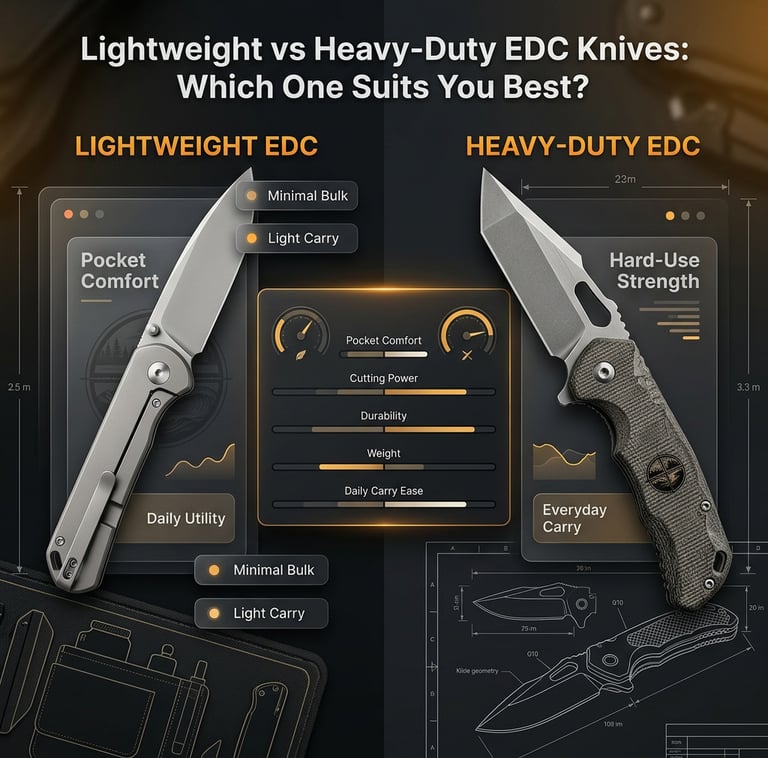
Lightweight EDC knives excel in everyday carry comfort and pocket invisibility, perfect for frequent use with light tasks.
Heavy-duty EDC knives offer superior durability and cutting power, suited for tougher materials and more demanding jobs.
Weight and materials play a major role in usability; heavier knives provide better control but can cause pocket fatigue over time.
Choosing the right knife depends heavily on your daily activities and personal comfort with carry weight and size.
What Defines Lightweight and Heavy-Duty EDC Knives?
At the core, the distinction between lightweight and heavy-duty knives boils down to what they prioritize. Lightweight EDC knives focus on being easy to carry all day long without weighing you down or hogging your pocket real estate. They usually have thinner blades, lighter materials, and smaller handles made from aluminum, titanium, or polymer composites.
Heavy-duty knives, on the other hand, are built like little workhorses. They have thicker, tougher blades, often made from steel varieties known for edge retention and ruggedness, and beefier handles that can take a beating too. These knives are comfortable when used standing up by a campfire or on a job site, but that comfort doesn’t always translate to sitting in your pocket during a busy day at the office.
Comparisons like Benchmade Bugout vs Spyderco Para 3 really show how lightweight carry philosophies differ from more substantial hard-use designs.
Materials and Construction Differences
After carrying both types for a while, I noticed that materials aren’t just marketing jargon—they directly impact day-to-day usability. Lightweight knives often use high-grade stainless steels that offer a good balance of corrosion resistance and ease of sharpening. Because the blade stock is thinner, less steel is needed to keep the knife durable enough for light tasks, which keeps weight down.
Heavy-duty knives usually step up the steel grade to include more robust options. These thicker blades can slice through tougher fibers or whittle wood without flexing or dulling too quickly. Expect blade coatings or finishes that add corrosion resistance but also contribute to that slightly heavier feel in your pocket.
If you want a deeper understanding of how steel impacts edge retention and durability, the EDC Knife Steel Guide helps explain the practical differences between common EDC blade materials.
Handles for heavy-duty knives typically swap out light alloys for denser materials like G-10 or micarta, providing better grip and impact resistance but adding heft.
Performance Comparison: Usability and Cutting Tasks
Usability often comes down to what you’re cutting and how long you’re doing it. Lightweight knives excel at everyday chores: opening packages, trimming threads, cutting fruit, or light food prep. Their thin blades slice cleanly and with less effort, which shows when you’ve done your share of paper and plastic cutting over a workday. They also cause less grip fatigue since the handle shapes and materials favor comfort over brute strength.
Heavy-duty knives shine when the task gets tougher—think cutting rope, chopping small branches, or handling materials like leather or thicker plastic. Their mass and blade geometry provide a satisfying chopping ability, giving you more control when force is required. That said, they start to feel cumbersome if you carry them all day without heavy use, especially if you forget they’re there until you sit down—instant backseat driver reminder.
Knives featured in Cold Steel AD-15 vs Spyderco Para Military 2 are a good example of how heavier knives prioritize strength and harder-use performance over minimal carry weight.
Comfort and Carry Considerations
This is where the real-life experience kicks in. After a full day with a lightweight blade in my pocket, the knife barely made itself known. It’s like carrying a feather…if feathers had a little steel blade attached. The reduced bulk and moderate weight meant no pocket bulges or weird shifting that can ruin the flow while seated or walking. For someone in an office or commuter environment, lightweight is often the more practical choice.
Heavy-duty knives demand respect from your pocket. They are the kind of tool that might remind you of its presence when you adjust your sitting position. The grip surfaces and handle contours on these knives usually handle sweat and moisture better, but that extra weight can cause subtle fatigue if your day involves a lot of moving around. Interestingly, heavier knives can feel more balanced in hand during use, but once out of your pocket, that benefit is more apparent.
If pocket comfort matters more than outright toughness, many of the knives in Best EDC Knives and Best EDC Knives Under $100 lean toward lighter carry-friendly designs.
Common Buyer Mistakes to Avoid
One of the more frequent errors I see—or have made myself—is buying a heavy-duty knife without thinking about how often you actually need to cut through tough materials daily. Carrying a 4-inch thick blade on your commute just because “heavier equals better” is like bringing a toolbox to a dinner party. It works, but it’s overkill.
Conversely, don’t automatically dismiss lightweight knives as flimsy. A well-made lightweight blade can handle a surprising amount of daily wear if made from quality materials. The breakdown usually happens when someone assumes smaller equals weaker and chucks it after the first sticky spot or stubborn cut.
Another trap is ignoring ergonomics. Handle shape and blade length matter as much as weight. A heavy-duty knife with a cramped or slick grip will tire your hand faster than a well-thought-out lightweight design.
You can really see those ergonomic differences in comparisons like Zero Tolerance 0357BW vs Kershaw Bel Air where carry comfort and cutting confidence feel completely different between the two knives.
Forgetting blade maintenance needs is also common. Thicker blades might hold an edge longer but can take more effort to sharpen, especially if they use very hard steel.
How to Choose the Right EDC Knife for You
Choosing between lightweight and heavy-duty knives means first looking at your day-to-day needs. Ask yourself: What tasks do you perform regularly? Am I more likely to cut cardboard and zip ties or branches and thick fabric? How important is pocket comfort to me?
If your day is mostly desk-bound with occasional “utility” moments, a lightweight EDC knife is probably your best bet. It’s less hassle to carry and more likely to stay sharp for what you need. If your routine includes outdoor activities, trades work, or heavier cutting chores, a heavy-duty knife will save you frustration and replace multiple tools.
Budget can also influence the decision. Heavy-duty knives often come at a premium due to their materials and design, but this reflects their durability. Lightweight knives offer more options in the budget range, and you might find surprisingly capable options when you look beyond big brand names.
Many people starting out also find that lighter options from Best EDC Knives for Beginners are easier to carry consistently while learning what they actually prefer in daily use.
Popular Models and Recommendations
Among lightweight EDC knives, models like the Spyderco Ladybug or Benchmade Bugout have earned their stripes—not just for being light but feeling natural in the pocket and hand over weeks of use. They disappear under fabric folds and rarely cause discomfort, even when carrying other gear.
For heavier options, knives such as the ESEE Junglas or the Benchmade 710 give you robust performance without completely sacrificing carry comfort. They’re the kind the outdoorsy type might grab for weekend camping trips or rough workdays where a knife is more tool than accessory.
Maintenance Tips for Both Knife Types
Both knife types benefit from regular cleaning and sharpening, but the heavier knives might need more attention with sharpening due to the tougher steels. Lightweight knives with thin edges can be delicate; pushing them too hard risks chipping.
Store either type in a dry environment to avoid corrosion, even if the steel is corrosion-resistant. Handle materials also respond differently to moisture—wood handles need occasional oiling; polymer and metal handles just need a wipe-down.
Developing a small maintenance routine after use will keep your knife performing well and looking sharp. Think of it as hygiene for your tools—it’s easier to carry a knife with confidence when you know it’s ready for action.
Frequently Asked Questions
What are the main differences between lightweight and heavy-duty EDC knives?
Lightweight knives prioritize ease of carry and comfort for light tasks, using thinner blades and lighter materials. Heavy-duty knives focus on durability and cutting power with thicker blades and sturdier handles, suitable for tougher cutting jobs.
Can a lightweight knife be used for heavy-duty tasks?
While some lightweight knives are surprisingly strong, they generally aren’t designed for extended heavy-duty use and may suffer damage or excessive wear if pushed beyond their limits.
How does knife weight affect daily carry comfort?
Heavier knives can cause pocket fatigue and discomfort when carried for long periods, while lighter knives tend to be less intrusive and more comfortable for all-day carry.
What materials are best for each knife type?
Lightweight knives often use corrosion-resistant stainless steels and lighter handle materials like aluminum or titanium. Heavy-duty knives use tougher steels for edge retention and hardier handle materials such as G-10, micarta, or steel.
Is a heavier EDC knife always more durable?
Not necessarily. Durability also depends on blade geometry, steel quality, and handle construction. However, heavier knives generally offer more robust cutting power and impact resistance.
How do I choose between a lightweight or heavy-duty knife for city vs outdoor use?
City and office environments benefit from lightweight knives that don’t bulk your pocket. Outdoor use or jobs with tougher materials call for heavy-duty knives that can withstand more demanding tasks.
What are some popular lightweight and heavy-duty EDC knife models?
Popular lightweight models include the Spyderco Ladybug, Benchmade Bugout, and Kershaw Cryo. Heavy-duty options include the ESEE Junglas, Benchmade 710, and Cold Steel SRK.
Does knife weight impact safety or control during use?
Weight affects control differently: heavier knives offer better chopping momentum but can tire hands faster. Lighter knives favor precision slicing and can reduce grip fatigue during extended use.
Conclusion
After living with both lightweight and heavy-duty EDC knives, I can say neither is inherently better—only better suited to different needs and lifestyles. Lightweight knives win on everyday comfort and ease of carry, making them excellent for office workers, commuters, and light users who want their knife close but out of the way. Heavy-duty knives make sense if your daily grind involves tougher cutting tasks or outdoor chores where durability isn’t an option but a necessity.
The key is balancing your typical activities with what you’re willing to carry comfortably every day. Remember, the best knife is not the heaviest or the flashiest but the one you actually carry and reach for without hesitation. If your pocket can handle the weight without complaint, a heavy-duty blade can be a handy workhorse. If you prefer something that fades quietly into the background, lightweight knives offer an elegant, hassle-free experience.
Whatever you choose, give it time in your pocket and hand—the subtle realities of daily use will tell you more than first impressions ever could. Just maybe keep an eye on that seat for the heavy ones. Your lower back will thank you.
Contact@TheBuzzHQ.com
© 2026 EDCBuzz. All rights reserved.
EDCBuzz
Master everyday carry systems with clarity and precision. Built for real environments and practical use.
For educational purposes only.
General Inquiries: